World Youth Day 2025: Are We Building a Future That Includes Rural India’s Young?
World Youth Day 2025: Are We Building a Future That Includes Rural India’s Young?
World Youth Day 2025 should make us pause for a bit. Not just to celebrate what we’ve done, but to ask, are we including every young person in our idea of progress?
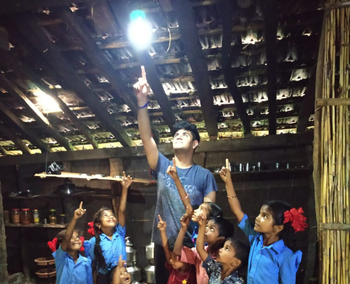
Project Chirag works at the heart of this question and has electrified over 24,788 homes across 821 villages, impacting more than 172,000 lives. Many of them are children and young adults who now have a chance to study at night, connect to the digital world, and dream bigger. The work is real, and your support has a part to play.
Youth Empowerment in India Means More Than Just the Internet and Internships
Let’s break it down. Youth empowerment in India often gets boiled down to hackathons, scholarships, or tech jobs in big cities. That’s fine, but it leaves out the millions of young people growing up without steady electricity, decent roads, or access to the internet.
Our work starts by bringing reliable solar lighting into rural homes. We give young people a shot at doing the basics, studying at night, charging a phone, and maybe in the future attending online classes when possible.
The change isn’t abstract.
Rural Youth and Future Development Can’t Be Two Separate Conversations
Conversations about rural youth and future development can’t be footnotes. They’re the main story. If you care about the future, you have to care about the villages.
We have observed the profound impact that occurs when grassroots development is approached with genuine commitment and seriousness. This dedication not only fosters local empowerment but also encourages sustainable growth, allowing communities to thrive and innovate from the ground up.
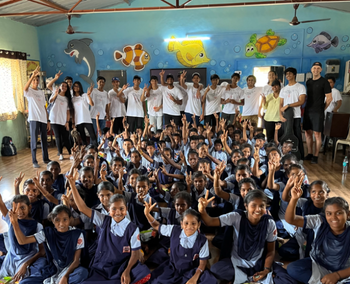
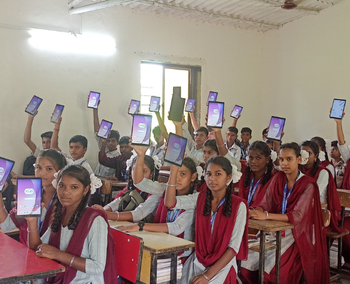
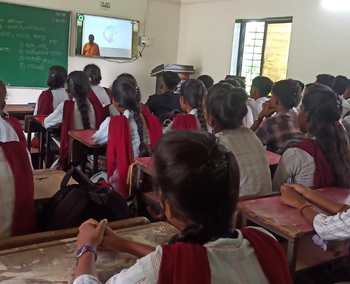
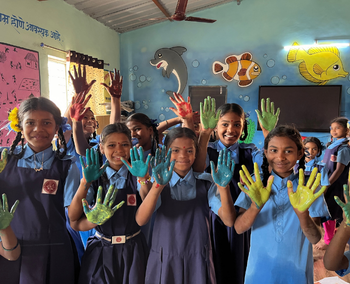
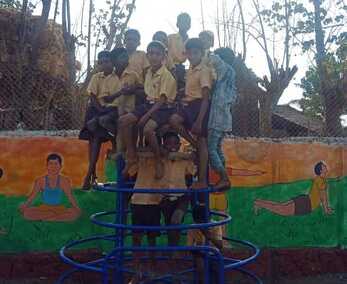
In Chatrapati Kanishth Mahavidyalaya, we brought solar electrification, better sanitation, and e-learning tools, completely transforming the school. That’s what progress looks like, not slogans, but sustained, quiet change. Our women empowerment program in rural Maharashtra has shown a measurable impact not just on confidence, but also on school completion rates and local leadership participation among girls.
Why India Needs Young Leaders From Rural Regions
The kind of young leaders India needs won’t all wear blazers and speak at panels. Some of them will be barefoot in dusty lanes, helping neighbors fix a broken solar panel or run a night class under a newly lit courtyard.
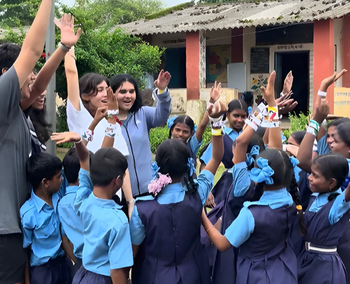
Real leadership grows from responsibility. From necessity. In our programs, we’ve seen village teens take ownership of everything from tech support to school attendance tracking.
There have been several cases where young women became first-generation learners and then community leaders, running tuition centers, health drives, and even managing solar maintenance tasks.
The potential is there. We just need to stop ignoring it.
World Youth Day 2025 Shouldn’t Feel Like a Checkpoint
World Youth Day 2025 shouldn’t just be an opportunity to post a photo on social media. It should ask hard questions like:
Are we actually investing in the kids who live where trains don’t stop?
Who teaches them?
When we talk about opportunity, are we including them?
Who’s lighting their homes so they can study after sundown without inhaling smoke from a kerosene lamp?
Project Chirag answers with action. Lighting homes in over 800 villages so far, we’ve seen what small shifts can do.
When you show up consistently in forgotten places, things change. Solar-powered anganwadis in remote locations now provide safe spaces for early childhood education, health checkups, and community meetings, all thanks to the stability that basic electrification brings.
And let’s be honest: change starts where comfort ends. If we’re serious about youth development, we have to start looking in rural areas, too.
We Can’t Talk About Young Political Leaders in India Without Rural Voices
Let’s talk politics. When people mention young political leaders in India, the spotlight usually lands on English-speaking, policy-tweeting city youth. But rural youth? They’re rarely even in the frame.
That has to change. We’ve seen how exposure and confidence can turn a student into a spokesperson.
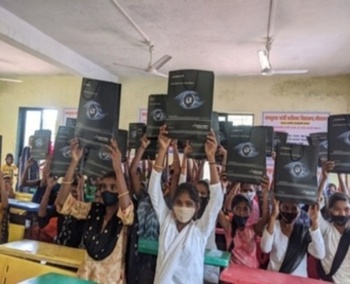
We have recorded increased civic participation among rural youth, especially after educational programs and electrification have made evening learning and information access possible. In some villages, students started attending local panchayat meetings. They asked questions. They suggested improvements. They got heard.
It starts with knowing you have a voice and having enough light to read the newspaper.
The Future Must Belong to Rural Youth Too: Support Project Chirag In Lighting A New Life!
This isn’t just about progress. It’s about fairness. Youth empowerment in India has to reach every district, not just the places with good signal and startup funding. Project Chirag exists to make that happen by solving the most basic but critical issue first: electricity.
We don’t claim to fix everything. But what we do offers a chance for a child to study, for a girl to lead, for a village to step into the future with pride.
If that speaks to you, there’s a way to help. A single donation can light a home and support rural development. That home can light up a mind. And who knows where that could lead?
We use cookies to ensure that we give you the best experience on our website. If you continue to use this site we will assume that you are happy with it.Ok