World Adivasi Day: Why Tribal Villages Are Still the Last to Get Electricity, and What Solar Can Do About It
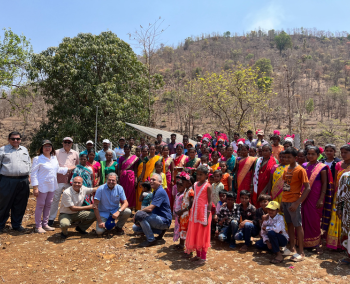
Every year on August 9, the world observes the International Day of the World’s Indigenous Peoples, more widely known in India as World Adivasi Day. The United Nations General Assembly set this date through resolution 49/214 in December 1994, marking the anniversary of the first meeting of the UN Working Group on Indigenous Populations in Geneva in 1982.
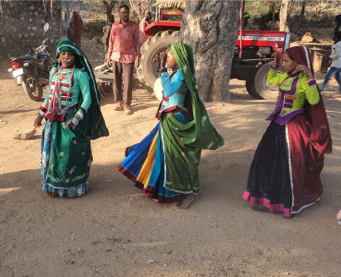
In India, this day carries particular weight. The country is home to over 10 crore Scheduled Tribe citizens, close to 9% of the national population, spread across hill ranges, forest belts, and river valleys that were never easy to reach with a power line. Decades after most of urban India stopped thinking about electricity as a privilege, many of these same tribal villages in India are still waiting for their first steady connection.
The Grid Reached the Country. It Didn't Reach Everyone Equally
India’s household electrification numbers look impressive on paper. The share of Indian households using electricity as their main source of lighting climbed from 26% in 1980 to 97% in 2020, and rural electrification alone grew from 39% to 95% over roughly the same window. Government schemes, particularly Saubhagya (Pradhan Mantri Sahaj Bijli Har Ghar Yojana), pushed hard to close this gap after 2017.
But the national average hides a lot. A household survey conducted in Jharkhand, a state with one of India’s largest tribal populations, found that Scheduled Tribe households were about 11 percentage points less likely to be electrified than the general population, even after accounting for income, location, and other factors. The same study found nearly 18% of tribal respondents had no electric connection at all, and the appliances tribal households did own carried far less power capacity than those in non-tribal homes. This is not a story about a country that forgot electricity exists. It is a story about rural electrification in India running fastest through the terrain that was easiest to wire first.
Why Adivasi Hamlets Get Left Off the Grid
The reasons are mostly physical and administrative, not accidental:
- Terrain and distance. Many Adivasi hamlets sit deep inside forest land, on hill slopes, or across river crossings that make pole-and-wire transmission expensive per household served.
- Small, scattered settlements. A hamlet of 15-40 homes rarely gets prioritised over a cluster of villages that can be wired in one stretch.
- Forest and land clearance rules. Grid infrastructure through protected or reserved forest land often needs additional clearances, which slows down projects for years.
- Last-mile funding gaps. Even where trunk lines exist, the final household connection, meter, wiring, and maintenance budget is frequently the piece that gets deferred.
This is why targeted government efforts now exist specifically for this last mile. In November 2023, the Ministry of Tribal Affairs launched Pradhan Mantri Janjati Adivasi Nyaya Maha Abhiyan (PM-JANMAN), a scheme built specifically to reach Particularly Vulnerable Tribal Groups (PVTGs) with housing, roads, and power connections (ETV Bharat, 2024). The existence of a scheme this targeted is itself evidence that mainstream community rural electrification programmes weren’t closing the distance on their own.
Where Solar Energy for Villages Changes the Equation
This is exactly the gap where off-grid solar solutions stop being a backup idea and start being the practical first option. A solar microgrid or standalone home lighting system does not need a transmission tower to reach a hamlet three ridges away from the nearest substation. It can be installed household by household, or as a shared system for a school and an Anganwadi center, without waiting for a grid extension that may take years to sanction and build.
Project Chirag, run by the Chirag Rural Development Foundation, has been working on exactly this problem across Maharashtra’s tribal belts, particularly in Palghar and Pune districts. According to the Annual Report 2024-25, the foundation’s cumulative work now spans 852 villages and has positively impacted 2,79,620 beneficiaries, with over 26,000 homes electrified and 873 kilowatts of solar capacity installed to date.
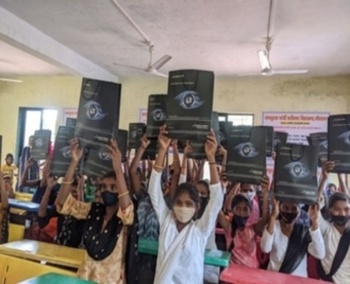
In the 2024-25 year alone, the organisation’s Integrated Village Development Program and Khilte Chirag school electrification initiative reached 33 villages and 7,622 beneficiaries. That included 1,216 homes electrified, 21 schools and 7 ICDS (Anganwadi) centers powered by solar, and 143 acres of farmland brought under solar lift irrigation. The same year’s work generated 1.9 lakh kilowatts of clean energy and cut an estimated 165 metric tons of carbon emissions.
What Changes When a Hamlet Gets Power
The report’s village-level accounts point to a consistent pattern once solar systems go in:
- Farming stops depending on the season alone. In Khuded and Bapugaon, Palghar, solar-powered lift irrigation brought water to fields that had relied entirely on rainfall, letting farmers grow multiple crop cycles instead of one.
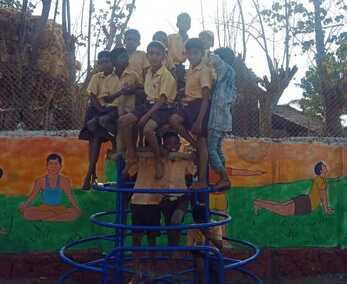
- Schools stay open through the day. At Gadad Primary School and in the Khed-Maval cluster in Pune, solar power meant classrooms could run smart TVs and fans through summer instead of losing teaching hours to outages.
- Evenings stop being unsafe. Villagers in Pimpurna and Meghwalpada described replacing oil lamps and candles with reliable light, which changed how comfortable women and children felt moving around after dark.
- Health improves alongside power. Solar-run water filtration units paired with the electrification work reduced water-borne illness in several of the villages covered in the report.
None of this required a new transmission corridor. It required a system that could be built for the terrain that was already there.
Energy Access in India Still Has Distance to Cover
Energy access in India is no longer mainly about whether a village shows up on the electrification map. Roughly 43,000 villages remain a rounding error against the country’s total, but within villages that are technically “electrified,” individual households, especially tribal ones, are often the ones still waiting for a working meter or a wire that reaches their specific home. That is the layer of clean energy for rural India initiatives like Project Chirag are built to work in: the household, the classroom, the health center that a national statistic doesn’t capture.
World Adivasi Day is a reasonable moment to say this plainly. Tribal communities have not lagged behind because they are harder to help. They have lagged behind because the standard model of electrification was built around distance and density, and Adivasi hamlets often score poorly on both. Solar does not need either.
Be Part of the Story
This World Adivasi Day, the most useful thing anyone can do is put resources behind the last mile that still doesn’t have power. Project Chirag works directly with tribal and rural communities to bring solar energy for villages, homes, schools, and farms that the grid hasn’t reached yet. Donate to Rural Electrification India, or get in touch to bring solar to a community you know.
FAQs
1. What is World Adivasi Day and why is it celebrated on August 9?
World Adivasi Day, formally the International Day of the World’s Indigenous Peoples, is observed on August 9 each year following a 1994 UN General Assembly resolution. The date marks the first meeting of the UN Working Group on Indigenous Populations in 1982.
2. Why do tribal villages in India still lack electricity?
Tribal hamlets are often located in forested, hilly, or remote terrain that makes standard grid extension costly and slow. Research from Jharkhand found tribal households were about 11 percentage points less likely to be electrified than the general population, even after adjusting for other factors.
3. How does solar energy help villages that are hard to connect to the grid?
Solar systems can be installed at the household, school, or hamlet level without waiting for transmission infrastructure to be built. This makes off-grid solar solutions faster to deploy in scattered or hard-to-reach tribal settlements compared to conventional grid extension.
4. What is Project Chirag and which areas does it work in?
Project Chirag is an initiative of the Chirag Rural Development Foundation focused on solar electrification, water access, and school infrastructure in rural and tribal India, with active work across Palghar, Pune, and Karjat in Maharashtra.
5. What government schemes support tribal electrification in India? Pradhan Mantri Janjati Adivasi Nyaya Maha Abhiyan (PM-JANMAN), launched in November 2023 by the Ministry of Tribal Affairs, specifically targets Particularly Vulnerable Tribal Groups with housing, connectivity, and electrification support.
References
Aklin, M., Blankenship, B., Nandan, V., & Urpelainen, J. (2021). The great equalizer: Inequality in tribal energy access and policies to address it. Energy Research & Social Science. https://doi.org/10.2139/ssrn.3854840
Chirag Rural Development Foundation. (2025). Annual report 2024–25. https://projectchirag.org/
Council on Energy, Environment and Water. (2024). What is electricity access & electrification percentage in India? https://www.ceew.in/publications/access-to-electricity-availability-and-electrification-percentage-in-india
ETV Bharat. (2024, August 8). International Day of World’s Indigenous Peoples: Celebrating cultural diversity across globe. https://www.etvbharat.com/en/!international/international-day-of-world-indigenous-people-enn24080806049
Samaj Weekly. (2025, August 13). International Day of World’s Indigenous Peoples Day – August 9 – Vishav Adivasi Diwas. https://samajweekly.com/international-day-of-worlds-indigenous-peoples-day-august-9-vishav-adivasi-diwas/
United Nations. (n.d.). Background: International Day of the World’s Indigenous Peoples. https://www.un.org/en/observances/indigenous-day/background
Vasudha Foundation. (n.d.). Status of village electrification in India. https://www.vasudha-foundation.org/wp-content/uploads/2)%20Reader%20Friendly%20Paper%20for%20USO_Status%20of%20Rural%20electrification%20status%20in%20India.pdf