The Literacy We Don’t Talk About: Understanding Energy Poverty as a Barrier to Learning
When we think about what a child needs to learn, we picture a book, a teacher, and a school. But what about a light switch?
For a staggering 300 million Indians, the “forgotten Bharat,” this simple switch doesn’t exist. Their homes are plunged into darkness at sunset, with little or no access to electricity. Before a child can achieve traditional literacy, they must first have access to a more fundamental resource: light.
This is the reality of energy, poverty, and education. It is one of the most significant yet overlooked barriers to education in our country. At Project Chirag, we believe that to bring rural India into the light, we must pivot our development on the most viable and continuous source of energy there is: the Sun.
The Daily Reality in Energy Challenges in Education
For millions of families, the only sources of light after dark are flickering kerosene lamps or wood fires. As our work on the ground has shown, this isn’t just an inconvenience; it’s a direct threat to a child’s education.
Imagine trying to read or write in the dim, smoky haze of a kerosene lamp. The toxic fumes present a serious health hazard. This leads to illnesses that keep children out of school. The daily cost of fuel drains household resources that could have been spent on books or nutritious food. This is the first and most immediate impact of energy on education: it makes the very act of studying difficult and dangerous.
How a Lack of Energy Creates a Barrier to Learning
The point of energy as a barrier to learning is a cycle that traps families in poverty.
- Limited Study Hours: The most direct impact is on time. When the sun goes down, study time ends. This puts students in unelectrified villages at an immediate and significant disadvantage.
- Poor Health and Attendance: Clean energy is directly linked to health. By moving away from hazardous fuels, we see positive health indicators, which means fewer sick days and more time spent in the classroom, where children belong.
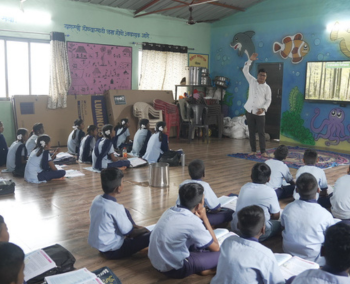
A Widening Digital Divide: In today’s world, modern education relies on technology. Our work in School Electrification brings solar packs and mini-grids to power lights, fans, and equipment for e-learning. This bridges a critical gap that a lack of power creates.
A Sustainable Solution Led By The Project Chirag Model
Since 2010, Project Chirag has been working every day to change this reality. We don’t just provide a temporary fix; we create a sustainable livelihood program that allows villagers to nurture their own progress.
The impact is real and measurable. To date, we have:
- Transformed 815 villages
- Illuminated 24,788 homes
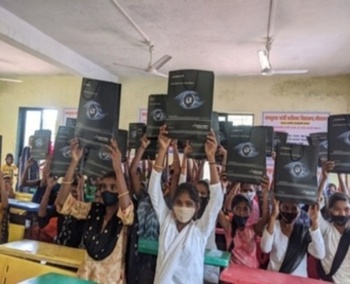
- Brought 138 schools out of darkness
- Generated 611 KW of solar power for sustainable transformation
We achieve this by partnering with grassroots organizations and the villagers themselves, who become stakeholders in their own development through their efforts. This ensures that when we install solar home lighting, street lights, or power a school, the change is built to last.
The Consecutive Effect Of Energy On Literacy
The impact of energy on literacy is the first step, but the light creates a powerful ripple effect that transforms entire communities.
When a home or a village gets access to solar power:
- Productive Hours Increase: Time once spent in darkness is now spent in schools, on fields, or on other work.
- Women are empowered: They can complete chores after dark and engage in income-generating activities.
- Carbon Emissions are reduced: Moving away from kerosene and wood benefits the environment and community health.
- School Dropouts are Reduced: With safe, clean light to study by, children have a greater opportunity to succeed and stay in school.
You Can Be the Light Through Project Chirag’s Initiative
The energy challenges in education are vast, but the solution is simple, effective, and within our reach. A solar light does more than illuminate a page. It provides safety, health, and opportunity. It empowers a community and lights up a child’s path to a brighter future.
Help us reach the next child waiting for the light.
- Donate: You can light up a home or an entire village. Every contribution supports the future of our rural citizens and creates a sustainable impact. Donate to a solar power NGO.
- Share: Help us shine a light on energy poverty. Share this article with your network and start a conversation about the literacy we don’t talk about.
- Learn More: Read more about our Integrated Village Development Model and see how we are bringing light and life to villages across India.