The 7 PM Economy: How Solar Power is Fueling Women-Led Home Businesses
When the sun sets in rural India, life often slows down. For families without electricity, evenings mean darkness, limited mobility, and stalled productivity. But in villages powered by Project Chirag, the story is changing. What once marked the end of the day is now the beginning of opportunity. This shift is what we call the “7 PM Economy”. A new window of possibility where women lead the way in building businesses, incomes, and independence.
Why the 7 PM Economy Matters for Women?
In rural communities, women juggle multiple roles. By day, they are caregivers, farm workers, and homemakers. But when darkness falls, these roles used to leave little space for income generation. Dependence on kerosene lamps made working unsafe and unhealthy. Unreliable electricity meant women had to stop production or trade well before demand did.
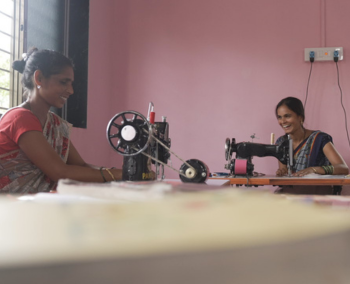
Access to solar energy for women’s empowerment has flipped this reality. With light in their homes and communities, women are no longer bound by the setting sun. They can continue tailoring, running food-processing activities, stitching garments, or tutoring children well past 7 PM. These additional hours are more than a time extension. They are a bridge to economic resilience.
For women, the evening economy is about gaining recognition as entrepreneurs and decision-makers. In societies where women’s work often remains invisible, solar power makes it visible, viable, and valuable.
Women’s Livelihood Centers Powered by Solar
Project Chirag’s Women’s Livelihood Centers offer a powerful example of the 7 PM economy in action. These centers were developed as hubs where women could gather, learn new skills, and start micro-enterprises.
What made these centers transformative was the integration of solar energy. With reliable lighting and power, training sessions could continue in the evenings, an otherwise impossible scenario. Thanks to this, women were able to:
- Train in tailoring, handicrafts, and small-scale food processing.
- Use evenings to practice their craft while managing daytime household responsibilities.
- Collaborate with peers in a safe, well-lit space that encourages collective entrepreneurship.
The centers became not just sites of income but also of solidarity. By anchoring women-led businesses in renewable energy, Project Chirag ensured that empowerment was sustainable. This is how solar power for home businesses evolves into a broader ecosystem of community change.
Suksale’s Integrated Development Program
In 2023–24, Project Chirag partnered with Sumitomo Chemical for a transformative intervention in Suksale, Palghar District. The program combined solar electrification of homes and streets with solar-powered lift irrigation, household water filtration, and Anganwadi electrification.
While these interventions touched the whole community, their impact on women was particularly striking:
- Agriculture and food security: With irrigation powered by solar pumps, women could participate actively in year-round cultivation. For many, this meant moving from subsistence to surplus, gaining income from market sales.
- Financial independence: Women reported greater confidence and agency in household decisions, as their earnings added stability to family income.
- Reduced migration pressures: Families no longer had to leave villages seasonally, which kept women engaged in both caregiving and entrepreneurial roles at home.
This example shows how renewable energy for women’s empowerment is as much about creating business opportunities as it is about creating an environment where women can thrive economically without being forced to migrate or give up their ambitions.
The Economic and Social Multiplier
The “7 PM economy” is not only about keeping businesses open longer. It carries deeper economic and social implications:
- Income security: With extended working hours, women generate consistent earnings that cushion families against agricultural uncertainties.
- Education alongside enterprise: Children can study in solar-lit homes while mothers run businesses nearby, a dual investment in the future.
- Community leadership: Women who run solar-powered businesses become role models, inspiring others in their village to follow.
Each solar lamp installed is an enabler of agency. When women earn after sunset, they challenge norms, claim recognition, and strengthen community resilience. This is why women-led businesses and renewable energy must be seen as core to sustainable rural development in India.
A Future That Doesn’t Dim After Dark
The 7 PM economy is a quiet revolution. It is happening in livelihood centers and in hundreds of villages across India where Project Chirag has intervened. Women are no longer waiting for sunrise to pursue their ambitions. They are taking big strides at all times, thanks to the steady glow of solar lamps.
The lesson is clear: investing in solar energy for women’s empowerment is investing in the rural economy itself. It is a strategy that multiplies benefits across health, education, and livelihoods.
As India works toward sustainability and inclusivity, the evening hours will matter just as much as the daylight. Because for countless women entrepreneurs, 7 PM is no longer the end of the day. It’s the start of possibility.
Support rural development today.