Still Waiting For Light: Independence Day In Rural India

August 15 marks 80 years since India became a free nation. Flags will go up in every state, speeches will talk about progress, and television anchors will replay footage of 1947. But in thousands of villages, the sun setting still means the day’s work stops. No lights for children to study. No fans in the summer heat. No way to charge a phone without walking to the nearest town.
That’s the part of the story that doesn’t make it into most Independence Day coverage. Rural India electricity access has improved dramatically since Independence, but improvement on paper and reliability on the ground are two different things.
The Gap Between Political Freedom And Electricity Access
India’s grid now reaches almost every village. That’s a real achievement. But reaching a village isn’t the same as powering a home consistently. Independent research backs this up: two out of three rural households in India still deal with power outages at least once a day, even after they’re technically “connected”.
A connection on a government chart doesn’t mean a working line into someone’s home, and it definitely doesn’t mean light after sunset every single day.
What Energy Poverty In India Actually Looks Like, One Village At A Time
Numbers on a dashboard rarely capture what a family experiences after dark. Project Chirag’s own fieldwork across rural Maharashtra shows what unreliable power actually costs a household.
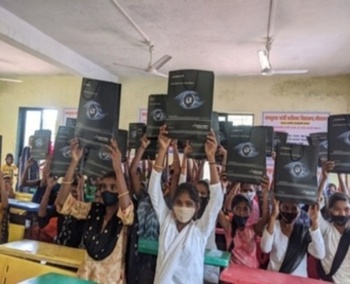
In Thakurwadi, Karjat, families once lived through power outages lasting 10 to 15 days at a stretch, leaving homes dark and children unable to study safely. In Pimpurna, Palghar, 186 families dealt with the same pattern before a solar intervention reached them: no reliable lighting in schools or anganwadis, women and children feeling unsafe after sundown, and evening chores done by candlelight.
This is what energy poverty in India looks like when you get past the national averages. It’s not a missing statistic. It’s a farmer losing a season’s vegetable crop to water scarcity, or a student finishing her 12th standard exams studying under an oil lamp.
Solar Power For Villages: A Working Alternative
Extending the grid to every remote hamlet is slow, and in hilly or forested terrain, often impractical. That’s where solar power for villages has proven itself as a faster, more dependable route to reliable electricity.
In FY 2024-25 alone, Project Chirag installed 107 kilowatts of solar capacity across 33 villages, electrified 1,216 homes, 21 schools, and 7 anganwadi (ICDS) centers, and generated 1.9 lakh kilowatt-hours of clean energy, reaching 7,622 beneficiaries. Since the program began in 2010, that work has scaled to 852 villages, over 26,000 homes electrified, and nearly 2.8 lakh lives impacted.
The change isn’t just about light bulbs. In villages like Khoste and Khuded in Palghar, solar-powered lift irrigation systems now water dozens of acres of farmland that used to depend entirely on the monsoon, letting farmers grow multiple crops a year instead of losing entire harvests to water shortage. This is what electricity access means when it actually works: a farmer no longer spending ₹25,000 a season on diesel, a family no longer walking hours each day to fetch water.
Why Clean Energy Is Central To Real Independence
Independence was never just about a flag change in 1947. It was a promise of dignity and opportunity for every citizen, in every village. Eighty years on, clean energy India initiatives are one of the clearest ways to finally deliver on that promise for households the grid has left behind.
Rural development India efforts built around solar power don’t just light homes. They keep schools running through exam season, let farmers irrigate through the dry months, and free up time that used to go toward collecting water or walking to charge a phone. That time turns into study hours, work hours, and income. This is sustainable rural development measured in acres irrigated, students staying in school, and families no longer forced to migrate for work.
Eighty years of freedom is worth marking. But freedom that doesn’t reach every home yet is unfinished work. The villages still waiting for reliable power are proof that Independence Day should be as much about what’s left to do as what’s already been achieved.
Light A Village With Project Chirag
Project Chirag has been installing solar power systems in rural India since 2010, reaching 852 villages and impacting nearly 2.8 lakh lives across the country. This Independence Day, you can help bring that same shift in electricity access to another village. Donate for village development and help a household, a school, or a farm get the reliable power that’s still missing 80 years after freedom.
FAQs
1. How many villages in India still don’t have reliable electricity?
While most Indian villages are technically connected to the grid, two out of three rural households still face daily power outages, and many go without power for days at a stretch in the worst-affected areas.
2. What is energy poverty and how does it affect rural India?
Energy poverty means a lack of reliable, affordable electricity. In rural India, it shows up as recurring power cuts, farmers losing crops to irrigation shortages, and children unable to study after dark.
3. How does solar power help rural villages in India?
Solar home systems and solar lift irrigation reach villages faster than grid extension, giving households consistent light, year-round farming, and schools that stay powered through the day.
4. Why is rural electrification linked to Independence Day?
Independence Day marks political freedom, but access to basics like electricity remains incomplete for many rural households, making energy access a measure of unfinished development.
5. How can I support rural electrification projects in India?
Organizations like Project Chirag accept donations that directly fund solar installations, irrigation systems, and school electrification in villages without reliable power. You can contribute through their website.
Sources
Council on Energy, Environment and Water. (2020). State of electricity access in India: Insights from the India Residential Energy Survey (IRES). https://www.ceew.in/publications/access-to-electricity-availability-and-electrification-percentage-in-india
Project Chirag. (2025). Annual report 2024-25. Chirag Rural Development Foundation. https://projectchirag.org/