Solar Power and the Future of Rural Schools – 7 Ways To Light The Way To Education
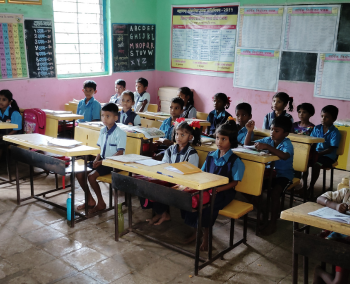
Walk into a modern-day school in any major city of India and you will see air-conditioned classrooms, smartboards and teachers, and in some cases even students, equipped with computers and tablets. However, there are schools in the same country, where let alone computers and smartboards, even a tube light might be considered a luxury.
When they refer to India is the land of contrasts, ‘they’ are not completely wrong, because on one hand we see the twinkling lights of the opulent malls and then there are villages, where there is no electricity at all or highly limited. While the government is playing its part and taking the effort to move India towards 100% electrification, there is a role for everyone else to play as well. NGOs such as Project Chirag have taken on the task to bring electricity to all those corners of the country, which might have been missed.
7 ways how solar power for educational institutions can transform education
In the recent past, there has been an impetus towards solar energy, not only because it is in abundance, but also because it is a clean, reliable, and sustainable source of energy. Here are just some ways in which solar power for schools is transforming the way children learn and schools function:
- Clean and bright lights for every classroom – For rural schools without access to reliable electricity, the absolute basic tasks such as lighting the classrooms, charging electronic devices, or powering fans during hot weather can be impossible. However, solar power can provide a sustainable and cost-effective solution. With the electricity generated via the solar panels, schools can have not only lights and fans in the classrooms, but also a more comfortable learning environment, which could possibly lead to improved academic outcomes.
- Promoting gender equality – Now, there might be people who would not see the connection between electricity and gender equality, but there actually is. In many rural areas, there is a safety concern about poorly lit environments and that often includes schools as well. As a solar project NGO working in India, we understand this concern, which is why we are working to illuminate not only schools, but also entire communities and villages to offer a safe learning space to all, irrespective of gender.
- Learning through the day – In many rural parts of the country, children often need to help their families with farming or other chores during daylight hours. This means that traditional schooling hours might not be possible for them. However, when there is electricity through the day, traditional hours of school need not be maintained. From the school being able to maintain multiple study sessions to even accommodating adults who might want to earn an education, electricity makes so much more possible.
- Access to digital learning tools – One of the most significant challenges for rural schools is the lack of access to modern educational technology. It is actually simple; when there is no access to reliable electricity, how would one use digital gadgets like computers, projectors, or other learning tools. Solar power system for schools could easily tackle this problem – with steady and reliable electricity, children would have access to similar digital learning tools as their city counterparts. With electricity, student exposure to STEM (Science, Technology, Engineering, and Math) will also increase and that would help them in the future as well.
- Electricity for better water and sanitation too – Several schools in rural areas also face problems related to clean drinking water, proper sanitation systems and so on. It is interesting to note that beyond lighting and powering classrooms, solar energy can also be used to run water purification and sanitation systems in schools. Solar-powered water pumps and purification systems can help ensure clean drinking water and sufficient water for the toilets as well. With access to drinking water and functional toilets, there is a possibility of increased attendance and less susceptibility to water borne diseases as well.
- Reduced operating costs at school – Several schools, especially those in rural areas, often have limited budgets and when operating an entire school resourced need to be restrained. Schools that rely on generators often face high fuel costs, which divert funds from essential educational materials and even salaries of teachers. This is where solar power for educational institutions comes into the picture, because it offers a cost-effective alternative that can significantly reduce operating costs. With more money in hand, schools can direct those funds towards better facilities for the children.
- Encouraging community engagement – In several villages, public spaces such as the school often become meeting grounds for the community. When a school adopts solar energy, the benefits can extend beyond the classroom – with a well-lit school, the community gains access to electricity for various needs, such as charging mobile phones, powering small businesses or conducing meetings.
Solar power is transforming the future of rural education and a solar Ngo in India like Project Chirag plays the role of a torch bearer. We are working tirelessly to making solar energy accessible to villages and schools. We understand the potential that solar power has and how it can revolutionize education for students in rural areas. By bringing clean energy to schools, we are helping ensure that all children, regardless of where they live, have the opportunity to learn, grow, and succeed and build a better future for themselves and those around them.