Power for All? The Truth Behind India’s Energy Divide
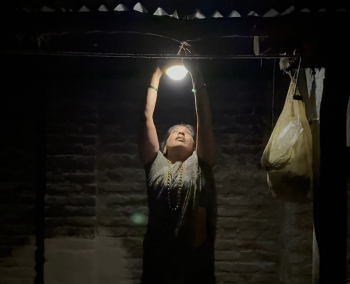
The promise of “Power for All” is one of India’s biggest success stories, yet it remains stubbornly aspirational. Despite lighting up nearly every household, the divide has merely shifted from access to quality. While the power sector has undergone a massive transformation, a persistent energy inequality means that for millions. The difference between an urban supply of nearly 24 hours and a rural supply of 22 hours still translates into a tangible gap in economic opportunity, comfort, and quality of life.
This blog explores where India stands today and where the divides still persist, reflecting a complex battle against energy poverty and the elusive goal of true universal quality electricity.
The Big Picture- India's Energy Progress
India’s journey toward energy sufficiency has been nothing short of spectacular. The focus on capacity addition and grid expansion has delivered impressive results:
- Installed Capacity: India’s total installed power capacity has soared to approximately 476 GW as of June 2025 (or 484.82 GW depending on the source).
- Clean Energy Shift: A huge policy push has led to a landmark moment: non-fossil fuel sources now account for nearly 49% to 50% of the total installed capacity, achieving the 2030 Nationally Determined Contribution (NDC) target five years ahead of schedule.
- Power Shortage: The national energy shortage has been practically eliminated, dropping from a significant 4.2% in FY 2013-14 to a mere 0.1% in FY 2024–25.
- Peak Demand Met: The country successfully met a record all-time maximum demand of around 250 GW in FY 2024-25, showcasing the grid’s enhanced resilience.
Electricity Access vs. Real Access- Understanding the Divide
The success of schemes like Saubhagya has ensured that grid connectivity is nearly universal. According to NITI Aayog SPI Electrification Report (2023), disadvantaged socio-economic households now have around 95% grid access. However, this electricity access in India is only the first step.
The key issue is that “access” does not guarantee reliable, high-quality power. This is where the urban vs rural electricity access disparity becomes most visible:
The Supply Gap- Urban vs. Rural
While both areas have seen dramatic improvements, the difference in assured supply hours reflects the continuing distribution challenges that fuel the power supply gap in India:
| Category | Average Daily Supply (FY 2024–25) | Improvement Since 2014 |
| Urban | ~23.4 hours | Up from 22.1 hours |
| Rural | ~21.9 to 22.6 hours | Up from 12.5 hours |
Despite the gap shrinking, this deficit of an hour or two daily in energy access in rural India impacts everything from small businesses to students’ study time. It is a fundamental marker of energy inequality in India. It is exactly these last-mile communities that Project Chirag focuses on, providing decentralized solutions where grid power is unreliable.
Energy Poverty and the Efficiency Gap
Energy poverty in India is no longer defined solely by the absence of a connection, but by the inequality in usage and efficiency.
- The Appliance Burden: Households struggling with energy poverty (often in slums or disadvantaged areas) frequently rely on older, less efficient appliances. A study published on arXiv (2025) means efficiency scores for electricity use were significantly lower in these communities compared to better-off households. This means they pay more for the same amount of power or, more often, use less energy and remain “energy-poor” even with a connection.
- Cooling Inequality: With climate change driving hotter and longer summers, the demand for cooling is soaring. However, rural electrification in India often fails to provide the stable, affordable power needed to run efficient modern cooling appliances, forcing households to use costly, less-efficient alternatives or suffer through the heat. This further exacerbates the inequality.
Persistent Challenges in Distribution
Even with minimal national India power shortage, electricity distribution challenges in India create “localised shortages” and reliability issues. The problem is structural:
- Technical and Commercial Losses: While improving, Aggregate Technical & Commercial (AT&C) losses remain a major drag due to factors like poor infrastructure, outdated metering, and power theft. These losses have reduced from 22.6% in 2014 to around 15% by 2025, but the figure still represents a massive loss of energy and revenue.
- DISCOM Financial Stress: Many state-owned distribution companies (DISCOMs) are still under severe financial strain. Their inability to recover costs due to the losses mentioned above and tariff issues prevents them from making the necessary capital investments in modernizing the distribution network.
- Feeder Segregation: The separation of dedicated power feeders for domestic/commercial use from those for agricultural use is crucial for providing a reliable supply. While efforts are underway, this technical and policy hurdle in rural areas impacts the stability of household power.
Leveraging Reform for Equity
The government is actively addressing these issues through major initiatives:
- Power for All India Scheme (24×7 Power for All): This foundational national initiative aims to ensure a reliable, round-the-clock power supply, acknowledging that mere access is insufficient.
- Revamped Distribution Sector Scheme (RDSS): With a budget of approximately ₹3 lakh crore, RDSS focuses directly on modernizing the distribution infrastructure, implementing smart metering (with 2.13 Cr smart meters already installed), and improving the operational and financial viability of DISCOMs.
These reforms, coupled with the fast pace of the clean energy transition, are key to closing the gap. By focusing policy on decentralized models like microgrids and battery storage, and by ensuring that the benefits of renewable energy reach remote and marginalized communities first, India can convert its capacity surplus into universal quality power.
Conclusion
India has accomplished the monumental task of providing nearly every home with an electricity connection. This progress is undeniable. However, true “Power for All” means more than a wire connected to a pole; it is about equitable, reliable, and sustainable power that transforms lives and economic prospects equally across urban and rural landscapes.
The unfinished business lies in the distribution network, the final mile of reform. By strengthening DISCOM governance, accelerating smart grid deployment under RDSS, and actively closing the rural-urban supply hours gap, India can fully realize its green energy ambitions and finally deliver on the promise of an inclusive energy future.
Support rural development and help Project Chirag to bridge the gap until grid reliability is universal!
Source
- https://static.pib.gov.in/WriteReadData/specificdocs/documents/2025/jun/doc2025622575501.pdf
- https://powermin.gov.in/sites/default/files/uploads/MOP_Annual_Report_Eng_2024_25.pdf
- https://www.fipi.org.in/Policy_Economic_Report/Policy%20Economic%20Report%20-%20July%202025.pdf
- https://www.niti.gov.in/sites/default/files/2023-02/SPI_Electrification_15.pdf
- https://www.eqmagpro.com/average-electricity-supply-in-rural-areas-has-increased-from-12-5-hours-in-2014-to-22-6-hours-in-2025-and-in-urban-areas-to-23-4-hours-in-2025-shri-manohar-lal-eq/
- https://arxiv.org/html/2501.05000v1
- https://www.pib.gov.in/PressReleasePage.aspx?PRID=2097601
- https://powermin.gov.in/sites/default/files/uploads/joint_initiative_of_govt_of_india_and_Chndigarh.pdf
- https://www.eqmagpro.com/tag/average-electricity/
- https://www.downtoearth.org.in/energy/indias-green-energy-paradox-44-gw-of-renewables-ready-but-no-takers