India's SDGs at the Village Level: What's Required
What India's Sustainable Development Goals Actually Require at the Village Level
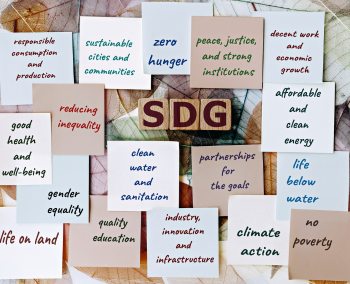
National pledges on the Sustainable Development Goals India has signed up to mean little if they stop at the state capital. The real test of the 2030 Agenda is whether a Gram Panchayat in a remote district can see its own progress reflected in the numbers, and act on it.
India's Three-Tier SDG Architecture
India implements the SDGs through three tiers: NITI Aayog as the national coordinating body, state-level SDG cells that adapt targets regionally, and the Ministry of Panchayati Raj, which leads the Localisation of SDGs initiative for Gram Panchayats and Urban Local Bodies (Anantamias, 2026). The Ministry of Statistics and Programme Implementation maintains a National Indicator Framework with 297 indicators feeding into this structure (Anantamias, 2026).
This matters because SDGs at village level cannot simply mirror national targets. A village’s priorities regarding water, sanitation, or girls’ education vary depending on terrain, literacy rates, and existing infrastructure.
Why Rural Development and SDGs Are Inseparable in India?
The rural economy contributes close to 46% of India’s national income (Research and Information Division, 2021, as cited in IIPA, 2024). With more than two-thirds of the population living outside cities, rural development and SDGs are not two separate policy tracks; rural outcomes largely determine whether India meets its national SDG commitments at all.
To track this, the Ministry of Panchayati Raj adopted a nine-theme approach for SDG localisation, mapping local indicators against national targets, with 389 local indicators worked out so far under these Local SDG (LSDG) themes (IIPA, 2024). One of the themes specifically targets women- and child-friendly villages, tying gender outcomes directly into the village-level scorecard rather than treating them as a separate initiative.
The Panchayat Development Index: Measuring What Happens on the Ground
To assess whether SDG implementation in rural areas is actually working, the Ministry of Panchayati Raj constituted an Expert Committee to build the Panchayat Development Index (PDI). The PDI measures incremental progress on Local SDGs using scores collected from individual Gram Panchayats over multiple years, and grades Panchayats based on their performance (PDI.gov.in, n.d.).
This is a meaningful shift. Instead of judging India’s SDG progress only by state-level rankings on the NITI Aayog SDG India Index, the PDI creates an evidence base at the level where development is actually delivered or stalled: the individual village council.
What Community-Led Development Looks Like in Practice?
Community-led development under this framework depends on a few concrete mechanisms:
- Local indicator tracking specific to a Panchayat’s actual gaps, not generic state averages
- Multi-year scoring, so a village can demonstrate progress rather than a single snapshot
- Thematic alignment, connecting local schemes (health, sanitation, livelihoods) directly to global SDG targets
Without these, village transformation initiatives risk becoming one-off projects that fade once funding ends, rather than measurable, sustained shifts in a community’s baseline.
Where SDG Implementation in Rural Areas Still Falls Short?
NITI Aayog’s own reporting flags states and Union Territories that lag both in their composite SDG score and in the rate of improvement on that score (IIPA, 2024). This unevenness is the clearest evidence that national-level intent does not automatically translate into village-level outcomes. A state can publish an ambitious SDG vision document while individual Panchayats within it still lack basic sanitation or reliable electricity.
This is precisely where grassroots social impact organisations have a defined role: closing the distance between the indicator framework on paper and the lived reality in a specific village, whether that means solar electrification, clean water access, or functioning anganwadis for early childhood care.
What This Means for Sustainable Villages in India?
Building genuinely sustainable villages India can rely on requires three things working together: a measurement system that reflects local conditions (like the PDI), funding and schemes that reach the Panchayat level rather than stopping at the state, and on-ground organisations that implement and adapt these schemes village by village. The architecture exists. The gap is in consistent, well-resourced execution at the last mile.
That last mile- electrifying a home, securing a water source, supporting an anganwadi- is where village transformation actually happens. Project Chirag works directly in that space, partnering with rural communities to convert national SDG ambition into a working pump, a lit classroom, or a functioning health centre.
See how village-level change happens. Donate for Sustainable Development India.
FAQs
- How are SDGs implemented at the village level in India?
Through the Ministry of Panchayati Raj’s Localisation of SDGs initiative, which maps national targets to local indicators using a nine-theme approach, tracked further through the Panchayat Development Index. - What is the Panchayat Development Index?
It is a tool that measures incremental progress on Local SDGs using scores from individual Gram Panchayats over multiple years, allowing villages to be graded on real performance rather than state-level averages. - Why is rural development important for India’s SDG goals?
The rural economy contributes nearly 46% of India’s national income, and over two-thirds of the population lives outside cities, making rural development and SDGs inseparable from India’s overall progress. - What challenges does India face in achieving SDGs at the grassroots level?
NITI Aayog’s own data shows several states lagging in both their composite SDG score and rate of improvement, highlighting a gap between national policy intent and on-ground execution. - How does community-led development support SDG targets in villages?
Community-led development ensures local indicator tracking, multi-year progress scoring, and direct alignment of local schemes like sanitation and health with global SDG targets, rather than one-off, short-lived projects.
References
Anantamias. (2026). Sustainable Development Goals (SDGs) and India: 17 goals, NITI Aayog SDG Index, and the 2030 Agenda. https://anantamias.com/sustainable-development-goals-india/
Indian Institute of Public Administration [IIPA]. (2024). Realisation of Sustainable Development Goals through Panchayati Raj institutions. https://www.iipa.org.in/publication/public/uploads/article/17641730967984.pdf
PDI.gov.in. (n.d.). Panchayat Development Index. https://pai.gov.in/Docs/pdf/PDI_PPT_210623.pdf