India's Green Jobs Revolution Is Already Happening. Just Not Where You Think
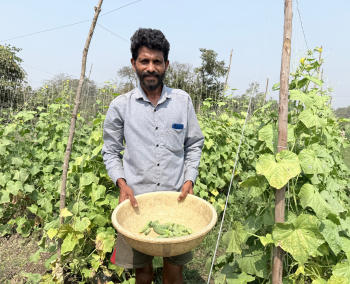
Walk through any conversation about green jobs in India, and you will almost certainly end up in a city. A startup in Bengaluru, a climate-tech office in Pune, or a solar policy desk in Delhi. But the numbers tell a different story. The green economy India’s villages are building right now is real, it is employing young people, and it is largely invisible to the mainstream conversation.
The Data Urban Discourse Is Ignoring
According to a 2025 report by WeNaturalists, a global platform for climate and nature professionals, green job interest in India surged 48% year-on-year, and the sharpest acceleration came not from metros but from Tier 2 and Tier 3 cities. These smaller cities collectively recorded a 50% annual rise in green job activity, far outpacing the 12–19% growth seen in Mumbai, Bengaluru, and Delhi NCR.
The age profile is equally striking: 63% of green job seekers in India fall between the ages of 21 and 30. These are young people who grew up watching floods, heatwaves, and water scarcity firsthand, and they want to work on the problem.
Meanwhile, on the ground in rural India, something concrete is already underway. According to IRENA’s 2024 Annual Review, India’s renewable energy sector employed approximately 1.02 million people in 2023, with 238,000 jobs in grid-connected solar PV alone, an 18% jump from the year before. An additional 80,000 people worked in the off-grid solar sector, which is where most rural employment in renewable energy actually sits.
These are jobs that exist today, held by people in villages across Maharashtra, Jharkhand, Uttar Pradesh, and beyond.
What a Green Job Actually Looks Like in a Village?
The definition of a “green job” in public discourse defaults to the technical and urban: solar engineers, ESG analysts, climate data scientists. That framing leaves out an entire workforce.
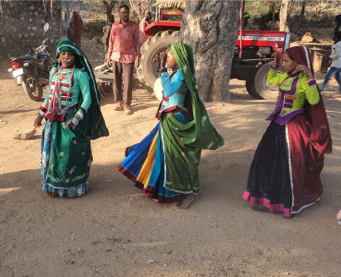
When a young man in rural Maharashtra installs a solar lighting system in a home that previously ran on kerosene, that is solar energy employment in India. Field-based, community-serving, and climate-positive. When a woman in Jharkhand maintains a solar-powered water pump that irrigates a shared farm, she is doing water management work that is central to climate resilience. When a local technician in a Tier 3 district services a solar mini-grid that keeps a health clinic running at night, that is rural employment in the renewable sector by any honest definition.
The NRDC and CEEW joint report on India’s expanding clean energy workforce found that decentralised renewable energy (DRE) projects: rooftop solar, mini-grids, biomass systems have greater scalability in rural areas precisely because they create local employment and bring the energy transition closer to communities. The report also noted that a skilled local workforce directly accelerates the deployment of solar parks and mini-grid projects. The workforce and the infrastructure depend on each other.
Why Tier 2 and Tier 3 Cities Are Outpacing Metros on Green Job Growth?
The WeNaturalists report found that three years ago, only 25% of India’s green job seekers came from Tier 2 and Tier 3 cities. By 2025, that share had grown to 35%. Cities like Ranchi, Indore, Kochi, and Jaipur are leading this shift. Not because of policy announcements, but because of an intersection of practical factors: lower cost of living, state government incentives for rural electrification, and young people who cannot migrate to metros and are building careers where they are.
This is where clean energy NGOs in India and sustainable livelihoods organisations working in rural areas are filling a critical gap. Training a village youth to install and maintain a solar pump, to read a system fault, and to document a maintenance report. That is green skills development happening outside the formal economy’s gaze.
The CEEW-NRDC research is direct on this point: rural communities need access to training institutes that teach in local languages, that accept candidates without formal qualifications, and that connect trainees to actual job platforms. Without that infrastructure, the rural green workforce remains potential rather than reality.
What Project Chirag Is Doing in This Space?
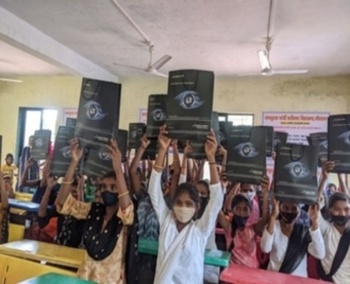
Project Chirag has been doing this work in India’s villages for years. Solar electrification, clean water systems, and school infrastructure are not conveniences but necessities in communities. The solar installations Chirag supports are not separate from the green economy. They are the green economy, decentralised and community-anchored.
Every solar light installed in a home that had none creates the need for someone to install it, someone to maintain it, and someone to explain it to the family. In a village where Chirag works, that person is often a young local, trained on-site, earning an income, and building a livelihood that did not exist before.
This is sustainable livelihoods in rural India as a practice.
The Opportunity India Cannot Afford to Miss
If India reaches its 500 GW non-fossil fuel target by 2030, NRDC and CEEW estimate the country could generate up to 3.4 million clean energy jobs. A substantial portion of that number will come from decentralised, rural, and distributed systems. The kind that cannot be managed remotely from a city.
The 21–30 age group that dominates India’s green job seeker pool is the same generation growing up in India’s villages. They are asking to be part of the green economy, on their terms, in their places.
The question is whether organisations, corporates, and policymakers are paying attention to where the demand actually is.
Support the Work That Is Already Happening
If you believe the green economy in India’s villages deserves investment, and not just attention, Project Chirag offers a direct way to contribute. Every solar system funded, every training supported, every community electrified is a data point in a rural green revolution that is larger than the headlines suggest.
Donate To Support Rural Communities | Partner with us on CSR | Join the Movement
References
International Renewable Energy Agency (IRENA). (2024). Renewable energy and jobs: Annual review 2024. IRENA. https://www.irena.org/Publications/2024/Sep/Renewable-energy-and-jobs-Annual-review-2024
Natural Resources Defense Council (NRDC) & Council on Energy, Environment and Water (CEEW). (2022). India’s expanding clean energy workforce: Opportunities in the solar and wind energy sectors. NRDC. https://www.nrdc.org/resources/renewable-energy-india-employment-potential-and-financing-solutions-solar-and-wind-energy
WeNaturalists. (2025). Green job demand surges 48%, led by Gen Z and Tier 2–3 cities. WeNaturalists. Reported via CXO Today, July 25, 2025. https://cxotoday.com/press-release/green-job-demand-surges-48-led-by-gen-z-and-tier-2-3-cities-wenaturalists-report/
Press Information Bureau, Government of India. (2024). Jobs in India’s renewable sector soar to 1.02 million in 2023. PIB. https://www.pib.gov.in/PressNoteDetails.aspx?NoteId=153238&ModuleId=3