How Solar Access Converts Unpaid Labour Into Economic Opportunity for Rural Women
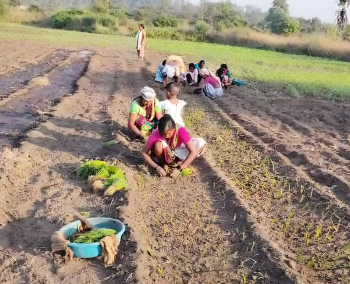
Across rural India, millions of women are trapped in a silent, exhaustively long work cycle. They are the first to wake and the last to sleep, yet their days are not spent generating income. Instead, they are consumed by a condition economists define as time poverty, the absolute deficit of discretionary time caused by the crushing burden of unpaid, survival-driven domestic chores.
According to data from the Ministry of Statistics and Programme Implementation (MoSPI) Time Use Survey, women in India spend an average of 299 minutes (nearly 5 hours) daily on unpaid domestic services, compared to just 97 minutes for men. In remote villages lacking reliable infrastructure, a massive portion of this time is dedicated to basic energy acquisition: trekking long distances to gather firewood, fetching water from distant wells, and manually processing crops.
When a village lacks modern power, women pay the price with their time, physical health, and economic agency.
However, the introduction of decentralised renewable energy for Villages is shifting this narrative. By providing immediate, reliable, clean power at the household and community level, Solar Energy for Rural Women functions as a massive structural reset. It actively converts hours of gruelling, unpaid labour into viable, income-generating Solar-Powered Livelihoods.
The Invisible Burden: Energy Poverty and Time Theft
For a rural woman, the lack of clean energy options dictates her daily mobility and economic value. Without electricity or modern cooking fuels, her schedule is structured around basic resource collection:
- Fuel Gathering: Women frequently walk 4 to 6 kilometres daily, carrying heavy loads of firewood weighing up to 25 kilograms. This chore alone drains 2 to 3 hours every single day.
- The Health Cost: Burning biomass inside unventilated kitchens exposes these women to toxic smoke equivalent to smoking 20 cigarettes a day, causing chronic respiratory and ocular illnesses.
- Manual Food Processing: Without motorised power, basic food preparation, such as grinding grains, dehusking paddy, or reeling silk, must be done entirely by hand, absorbing hours of intense physical labour.
This is the core of energy inequality. Because her day is completely consumed by keeping the household running, a woman has zero time left to learn a trade, manage a business, or earn an independent income.
The Solar Multiplier: 4 Ways Clean Energy Shifts the Equation
When organisations like Project Chirag deploy Clean Energy Solutions, such as solar home lighting systems, community solar pumps, and micro-enterprise power setups, the impact ripples far beyond carbon reduction. It completely alters how rural women spend their time and generate capital.
1. Eliminating Drudgery and Reclaiming Time
The most immediate impact of distributed solar power is the liberation of time. When a village gains access to solar-powered community water pumps and clean solar cookers or dryers, the daily necessity to fetch water and forage for firewood vanishes.
Field evaluations show that automated solar installations reclaim 2 to 3 hours of free time per day for individual household women. For the first time in their lives, these women possess a surplus of discretionary time that they can actively reinvest in their own financial growth.
2. Transitioning to Solar-Powered Micro-Enterprises
Liberated time, paired with reliable electricity, serves as the ultimate launchpad for women livelihood initiatives rural India . Across agricultural and textile belts, decentralised solar units replace exhausting manual techniques with efficient, automated machinery:
- Textile Revolution: In India’s massive silk and textile value chain, where over 60% of workers are women, solar-powered spinning and reeling machines eliminate the highly painful and unhygienic practice of ‘thigh reeling’.
- Agricultural Value Upgrades: Access to solar-powered food dehydrators, multi-crop grinders, and mini-mills enables women’s Self-Help Groups (SHGs) to process raw seasonal produce into high-value packaged food products (like dried fruits, chips, and ground spices), expanding local revenues by two to three times.
3. Creating Night-Commerce Opportunities
In an un-electrified village, a woman’s productivity ends abruptly at sunset. Solar home lighting modules and solar streetlights effectively shatter this daylight barrier.
With safe, clear illumination inside the home, women can comfortably run home-based retail shops, execute tailoring contracts, or manufacture artisanal handicrafts well into the evening. Extending operations past dusk provides a reliable 30% to 50% boost to a household’s micro-enterprise revenue.
4. Financial Inclusion and Digital Leadership
Reliable solar power forms the baseline infrastructure for modern digital services. Armed with solar-powered charging kiosks and dependable mini-grids, rural women are stepping forward as Banking Correspondents and digital entrepreneurs.
Operating out of small solar-powered retail spaces, they process Aadhaar-linked fund transfers, print official government documents, and handle online bill utilities for their entire community. This positions them not just as earners, but as indispensable technological leaders within their local village economies.
The Societal Shift: From Income to Autonomy
The true success of driving Sustainable Rural Livelihoods through clean energy lies in the shift in social dynamics. Data collected from distributed renewable deployments across rural India highlights a clear pattern: when a woman transitions from an unpaid domestic labourer to a primary earner through solar access, her status undergoes a fundamental change.
Women who manage solar-enabled businesses report a significantly larger voice in major household financial choices, enhanced personal mobility, and heightened respect within their village councils (Gram Panchayats). Furthermore, because women routinely reinvest up to 90% of their personal income back into their families, this newly unlocked capital goes straight toward buying better nutrition, accessing quality healthcare, and funding higher education for their daughters.
Comparative Blueprint: The Structural Transformation
Life Metric | The Era of Energy Poverty | The Era of Solar Access |
Daily Time Allocation | 4-5 hours lost to foraging, walking, and manual grinding. | Reclaimed; redirected to training and micro-enterprise. |
Primary Livelihood | Unpaid, survival-driven domestic labour. | Ownership of Solar-Powered Livelihoods. |
Physical Health Profile | Severe respiratory issues from indoor biomass smoke. | Clean, zero-emission home and workspace environments. |
Economic Agency | Total financial dependence on male family members. | Strong financial autonomy and localised digital leadership. |
Community Position | Marginalised; excluded from local leadership choices. | Respected stakeholders are driving local community growth. |
Partner with Project Chirag for True Gender Equity
At Project Chirag, we recognise that true Women Empowerment in Rural India cannot happen without solving the underlying energy bottleneck.
Our grassroots initiatives focus on delivering decentralised solar lighting, solar micro-grids, and clean energy appliances directly into the hands of rural women’s networks. By removing the daily burden of unpaid labour, we help unlock an entire generation of rural women entrepreneurs who are ready to build a clean, equitable, and self-sufficient future. When you choose to Donate For Rural Development in India through our platform, you directly fund the infrastructure that turns time poverty into absolute economic freedom.
FAQs
1. What exactly is ‘time poverty’ in the context of rural Indian women?
Time poverty refers to the severe lack of free, discretionary time experienced by individuals, disproportionately women, who must spend the vast majority of their day performing unpaid, survival-based domestic tasks like collecting firewood, carrying water, and manual cooking preparation.
2. How does solar energy help eliminate the unhygienic practice of thigh-reeling?
In traditional silk production, women manually roll raw silk threads across their thighs, causing skin lesions and joint pain. Solar-powered reeling machines automate this spinning process completely, removing the physical strain entirely while doubling production efficiency and textile quality.
3. Can solar home systems really drive rural women’s entrepreneurship?
Yes. Providing clean, reliable light after dusk enables women to run micro-shops, execute tailoring jobs, and create handicrafts in the evening, freeing them from the constraints of daylight hours and increasing their income-generating capacity.
4. Do solar systems remain operational in villages over the long term?
Long-term sustainability relies on community-led management. Project Chirag addresses this by training local women and youth collectives as solar technicians, teaching them to handle basic operations, battery maintenance, and routine servicing internally.
5. How can my corporate organisation support solar initiatives for rural women?
Companies can partner with Project Chirag through targeted CSR initiatives. Funding options include setting up community solar pumps, deploying solar agricultural processing units, or establishing clean energy micro-kiosks run exclusively by women-led self-help groups.
Sources
Council on Energy, Environment and Water (CEEW). (2026). Driving energy transition: Workforce, skills, and gender in India’s renewable energy sector. https://www.ceew.in/publications
Council on Energy, Environment and Water (CEEW). (2026). Powering Uttar Pradesh: The Vidyut Sakhi model for women’s empowerment and discom revenue recovery. https://www.ceew.in/publications
Ministry of New and Renewable Energy (MNRE). (2024). Guidelines for “PM-Surya Ghar: Muft Bijli Yojana”. Government of India. https://mnre.gov.in/en/notice/guidelines-for-pm-surya-ghar-muft-bijli-yojana/
Ministry of Statistics and Programme Implementation (MoSPI). (2025). Factsheet of the second all-India time use survey (TUS 2024). Press Information Bureau, Government of India. https://www.pib.gov.in/PressReleasePage.aspx?PRID=2106113