
Gumbadpada
October 2019
Nashik
Households: 65
People: 345
Intervention
Integrated Village Development

Lives Impacted
0

Homes Illuminated
0
Donor
Rotary Club of Bombay
Grassroot Partner
Diganta Swaraj Foundation
Assessment
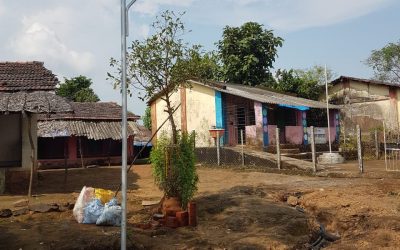
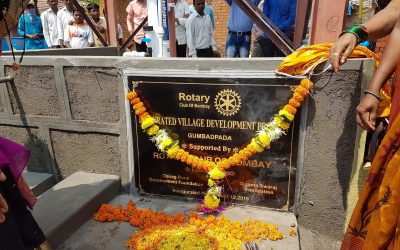
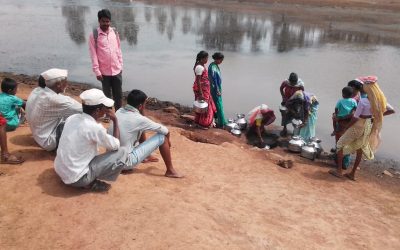
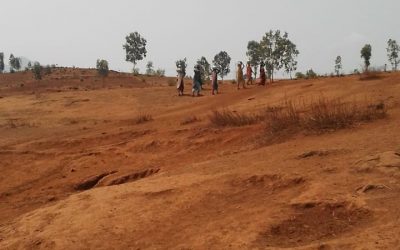
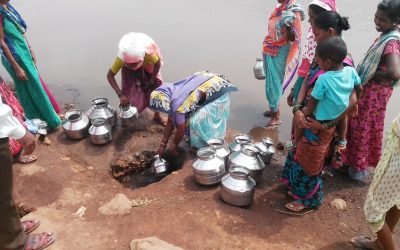
Gumbadpada, is a village in the Mokhada region that was poorly electrified, and the village experienced load shedding for more than 10-12 hours a day, with no electricity at all during the monsoons. It has a tribal population that was totally dependent on the monsoons for mere subsistence farming. The villagers would migrate to the neighboring towns in search of jobs post monsoons, leading to the displacement of children from their schools in addition to all the ills of migration. The village has a flowing dam water source near the village, however since the village is almost a kilometer away from the source, the villagers would have to spend at least an hour each trip walking to procure water a few times each day. Similarly, the water source was open for cattle and human beings alike. This exposed them to disease and epidemics. For drinking water, the villagers had dug a pit on the banks of the flowing stream and both cattle and humans accessed that source. The planning of the intervention at Gumbadpada yielded a request from villagers of Aasranagar, a 29-family hamlet en route from the water source to Gumbadpada, as well as 5 “jhaps” nearby, to help them as well. Rotary Club of Bombay rose to these requests, and engaged in its first Integrated Village Development Project in Gumbadpada, bringing sustainability in the form of light, water, education, health and livelihood to this village.
Intervention
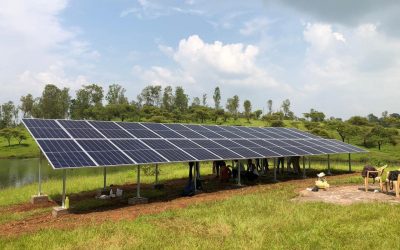
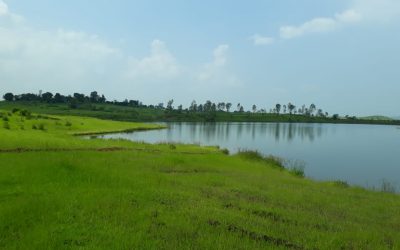
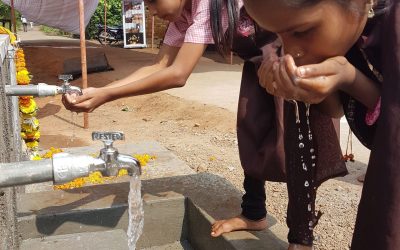
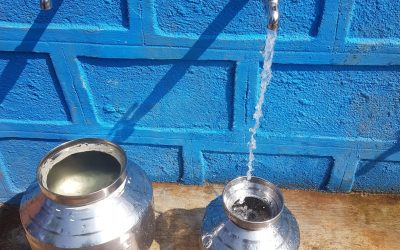
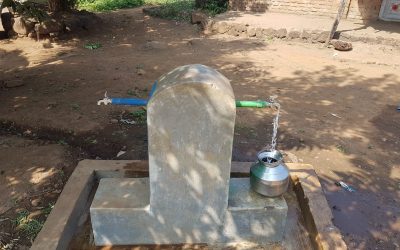
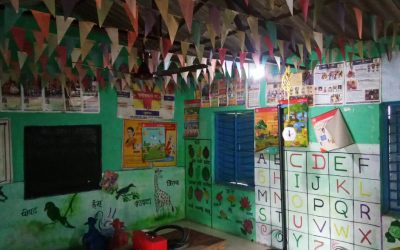
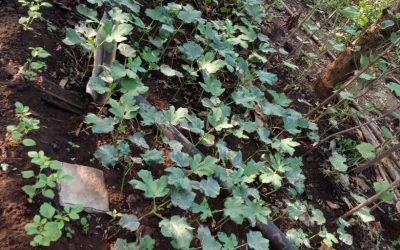
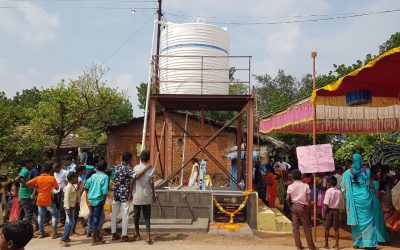
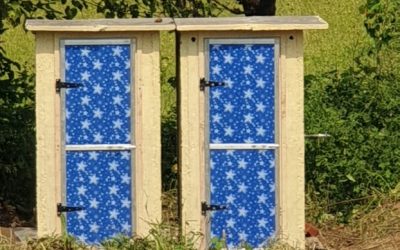
65 homes received solar home lighting systems with 2 bulbs, a mobile charging facility and a portable lantern. The village also received 2 strategically placed street lights. 65 homes received solar home lighting systems with 2 bulbs, a mobile charging facility and a portable lantern. The village also received 2 strategically placed street lights. A 7.5HP lift irrigation pump was installed in the Warghadpada dam, powered by a 10 KW solar mini-grid, to pull water up almost 1.2 km to Gumbadpada (head of 70 m) and stored in two 5000 liter tanks at the highest point in the village. One blue tank is meant for agriculture which allows water to be distributed for farming. 340 mango and cashew tree saplings were transplanted onto 17 farmers’ lands. Multi cropping training and guidance was provided throughout the year. 16 farmers have started mogra cultivation. The white tank was also connected to a water filter and villagers now get drinking water from taps, and taps were also fitted at convenient points across the village (at the school, aanganwadi, near community toilets) to enable usage. Waste-water management is an aspect that we have also looked into. Domestic waste water used to flow onto the streets and evaporate but now soak pits have been built, allowing for Kitchen Garden cultivation. 2 community toilet blocks have been built to aid the villagers.
Impact
Gumbadpada was Project Chirag’s first IVD Project and the impact created was mammoth. With each intervention we also learn what will have better future output in following projects.For domestic use, villagers shared that a ‘well’ like system where they could collect water using buckets was more efficient for them, than queuing up at single taps. This enabled the building of concrete tanks called ‘houds’ in future projects. Gumbadpada was the first village of its kind in the region to receive multiple tap stations. Located in frequently used areas like outside schools, toilets, they saw a free flowing of water for domestic and drinking use for the first time. Solar lights have worked on cloudy days as well with diffused sunlight, The main solar system has functioned perfectly even during cloudy, monsoon weather, generating enough power to pull water for filtration and drinking purposes. With a clear focus on sustainability we looked at closing the resource cycle while also benefiting the villagers. To do this we initiated the concept of Kitchen Gardens by engaging in Wastewater Management. Domestic wastewater has been used to cultivate soak pits with a variety for a variety of produce, that not only allows for more family nutrition, but in many cases also presents an income generating component. Seeds and training have been provided for the same, and vegetables like Gavar, Vaal, Bhindi, Tomato, and Kadi Patta have been flourishing in these Kitchen Gardens.


