Forced Migration: What’s Pushing Rural India Out of Its Villages
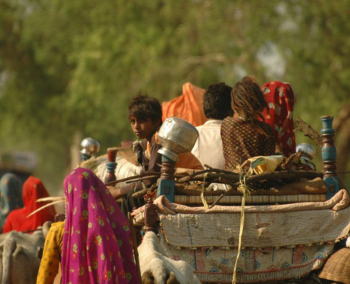
When people leave their villages in India, it’s rarely a simple choice. For millions, migration is a last resort. A calculation made when crops fail, water runs dry, debts mount, or the next climate shock hits. Understanding the reasons for rural migration matters. Why? Because it tells us where policy, markets, and community action are failing, and where they can still turn the tide.
1. Climate Shocks & Water Stress: Disasters Are Redrawing Livelihood Maps
Climate volatility is now one of the strongest push factors in rural migration. India recorded 5.4 million disaster displacements in 2024, its highest since IDMC started tracking in 2012, driven heavily by severe monsoon floods (2.4 million displacements) and cyclones.
Heat is the other slow, grinding force behind rural to urban migration. By the summer of 2024, India had logged 536 ‘heatwave days’ across IMD meteorological subdivisions, a stark signal of how prolonged heat suppresses outdoor work, reduces agricultural productivity, and strains health, especially for informal workers.
Heat extremes and erratic rainfall undermine entire risk calculations for farm families. They push bread earners (and increasingly, entire households) to cities in search of wage work.
Looking ahead, the causes of rural migration will be shaped even more by climate. The World Bank’s Groundswell analysis warns that South Asia could see tens of millions of internal climate migrants by 2050, with the region’s hotspots emerging as early as the 2030s without inclusive, climate-resilient development
2. Agrarian Distress & Indebtedness
Even in ‘normal’ years, the economics of small and marginal farming are punishing. Fragmented holdings, volatile prices, rising input costs, and limited risk protection funnel families toward short-term urban work. Government statistics affirm that employment is the top reason for male migration, while marriage dominates for women; in PLFS 2020–21, 49.6% of male migrants cited work as the reason (vs. 86.8% of women citing marriage), and the overall migration rate was 28.9%.
But ‘work’ here is a proxy for distress. When non-farm opportunities are thin in rural areas, few local enterprises, seasonal MGNREGA demand, limited skilling, the city becomes the only shock absorber. In practice, that often means precarious, low-wage, informal jobs with weak social protection, turning what began as seasonal moves into churn between village and city.
3. Services, Safety, and Social Vulnerability
Forced migration is rarely about a single failed crop. It’s a stack of deficits, education, health, water, safety, that make staying put irrational.
- Education & Health: Intermittent electricity and poor facilities reduce learning hours and clinic reliability, nudging families to move where children can study and illnesses don’t derail income.
- Water & Sanitation: When safe water is distant or unreliable, households lose hours daily, time that could have gone to farm work or home enterprises, worsening the poverty trap.
- Gendered Risks: Women face acute vulnerabilities during climate shocks and heat waves, which can reduce home-based earnings and raise health risks; without adaptive services, moving appears safer or more viable.
Project Chirag has addressed energy, water, and livelihoods as interlocking essentials. Through initiatives such as solarizing Women’s Livelihood Centers, installing community water filtration systems, and electrifying schools, the project framed these not merely as amenities, but as migration-risk reducers that help stabilize life locally.
4. What Actually Reduces Forced Migration?
The data is clear on push factors in rural migration; the harder question is: what works?
- Reliable Local Livelihoods (Irrigation + Market Linkages).
Irrigation is one of the most direct hedges against rainfall risk. Pingeman’s solar lift irrigation is a live example of a resilience investment that replaces post-monsoon migration with multi-cropping, anchoring income where people live. - Basic Infrastructure that Extends the Productive Day.
Electricity isn’t just light; it’s time, a chance to add work hours, store perishables, run tools, and keep children in school. In Karjat, solar power projects electrification across homes, streets, and the Anganwadi integrated with lift irrigation and household water filtration delivered productivity gains and a reported decline in migration. - Women’s Economic Agency
When women participate in income decisions, households diversify earnings and smooth shocks better. Solar-powered Livelihood Centers, evening-friendly, safe, and reliable, convert free hours into income hours, making relocation less compelling. - Planning for Heat & Flood Risk
District-level heat risk mapping (and crop advisories) must pair with water storage and micro-irrigation. The 2024 season showed how heat can escalate quickly across regions; planning for extreme heat days and flood-safe assets reduces sudden displacement. - National Policy that Sees Migration as Strategy, Not Failure
New analyses from the Economic Advisory Council to the PM underscore the continued attachment to rural origins and the pivotal role of remittances in village economies. So policies should improve portability of entitlements and social protection, while investing in rural resilience to lower the ‘forced’ in migration.
Conclusion: From Compulsion to Choice
The causes of rural migration in India are converging: climate shocks, water stress, agrarian distress, and service deficits are pushing households to move. But they also point to the solutions. When villages gain year-round irrigation, dependable power, safe water, and spaces where women can earn after dark, migration patterns change, from forced exits to voluntary, strategic mobility.
That’s the promise embedded in Project Chirag’s work: reduce the push, and people can choose. In times when rural to urban migration will continue, the goal isn’t to freeze mobility, it’s to ensure that migration is a choice made for opportunity, not a compulsion born of risk.
Support rural development today!
Source:
https://www.internal-displacement.org/countries/india/
https://www.ceew.in/publications/mapping-climate-risks-and-impacts-of-extreme-heatwave-disaster-in-indian-districts?