Beyond Classrooms - How Integrated School Programs Build Community Leaders
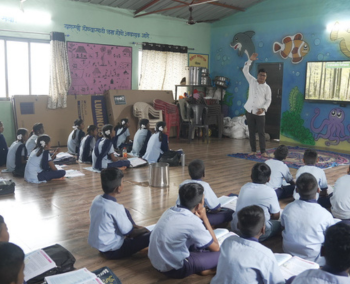
In today’s world, things are more connected than ever. The old-school classroom just doesn’t suffice anymore for the holistic development of a student – it is not the only place for learning and growing as a complete individual. These days, schools have a much bigger job—they’re expected to help students not only excel academically but also grow in all sorts of ways that get them ready for life in their communities and even beyond. That’s where an integrated school development program comes in.
Instead of sticking to the usual way of teaching just one subject at a time and cramming facts and figures, these programs create a rich, more inclusive and varied learning experience. They’re all about getting students ready to step up as leaders in their communities in the future.
We at Project Chirag believe that education should encompass more than simply the typical classroom activities. We concentrate on enhancing schools’ resources and infrastructure. Our programs are made to address a wide range of needs. We wish to offer the necessities and resources that support schools’ success, not just solar energy projects for school students. While students may benefit from these programs, the larger goal is to develop the schools themselves, which further leads to the development of the entire community.
We want to make sure they have all the resources and assistance they require to overcome different obstacles in their schooling, and contribute meaningfully towards society. We are dedicated to improving the educational setting and creating a strong basis for upcoming generations. It ultimately comes down to encouraging leadership and accountability among the entire school community, and we at Project Chirag are humbled to be the facilitators of this greater good.
Understanding school integrated program and its benefits
At its core, an integrated school program mixes different subjects, strategies for learning, and real-life experiences into one cohesive journey. It goes beyond the usual classroom setup, bringing in things like project-based learning, getting involved in the community, extracurricular activities, and even linking different subjects together – which is also called cross-curricular linkage. This helps students see how everything is related, and how knowledge fits into the bigger picture of the world around them.
This isn’t a typical school setup that just crams information into students’ heads; it smoothly combines various aspects of learning. It puts a spotlight on experiential learning, which means it includes:
- Community engagement: Students get themselves completely involved in community service projects, tackling local issues and creating a sense of belonging. Those in integrated programs often jump into community initiatives, which builds a strong sense of civic duty and a desire to contribute positively to society. By taking part in these projects and stepping into leadership roles, they pick up many leadership skills, like making decisions, solving problems, and motivating others.
- Life skills development: These programs hone in on key life skills, like critical thinking, communication, and teamwork – skills that are very important for succeeding both personally as well as professionally. By intertwining together different subjects and real-world experiences, students aren’t just soaking up academic knowledge; they’re also learning vital life skills like how to work well with others and think critically. By adding practical experiences into the mix, learning becomes more engaging and meaningful. They grasp concepts better and actually remember what they’ve learned.
- Holistic development: These programs also encourage artistic creativity, physical health, and emotional intelligence, which helps create well-rounded individuals. When students interact with a variety of people and viewpoints, they develop empathy – something that’s essential for strong community leadership. Getting involved with the community really helps build compassion and a sense of social responsibility. Plus, students learn the art of collaboration, effective communication, and how to handle conflicts in a positive way.
- Experiential learning: Things like field trips and real-world projects give students practical knowledge and experiences that are invaluable. Integrated programs create a space for students to take the lead, dive into their interests, and polish their leadership skills in a nurturing environment. When they get involved in community projects and can showcase their abilities, it really boosts their confidence and encourages them to take the initiative.
Community leadership for students
A community leader is someone who steps up to make a positive change in their surroundings. It could be through social action, volunteering, or advocating for important causes. It’s all about really grasping the issues that a community faces and rolling up your sleeves to tackle them head-on. Now, when we talk about students and leadership, it’s not just about having some fancy title. It’s more about the ability to motivate, guide, and rally others around shared goals. And that’s where integrated school programs come into play, shining bright!
So, what exactly do these Integrated School Programs do? They’re very important for helping students grow as community leaders. By really getting involved in their communities, students can:
- Spot local problems, come up with creative solutions, and kick off projects that meet what the community needs.
- Understand what it means to be good citizens, making meaningful contributions to improve their neighbourhoods.
- Build connections with local folks, organizations, and other key players, which really helps widen their social and professional circles.
- Their actions and leadership can spark inspiration in other students and community members, encouraging everyone to join in and make a real difference.
Student learning community leadership
In a school setting, a school integrated program helps to boost student leadership in the community. Students can do quite a bit. For instance:
- They can guide and lend a hand to younger peers, sharing what they’ve learned and their experiences.
- They take charge of organizing and managing extracurricular activities, which not only promotes involvement but also sparks creativity.
- They also get involved in school councils and committees, where they can voice what students are feeling and help shape decisions that affect everyone.
Here at Project Chirag, we truly believe that these Integrated School Programs are vital for helping kids grow into well-rounded individuals and responsible citizens. Instead of sticking just to traditional classroom learning, we aim to empower students to be active learners, sharp thinkers, and caring leaders in their communities. By engaging with the community, developing life skills, and learning through experiences, we give students the tools and confidence they need to make a real difference in the world.
We’d really love for you to join us on this amazing journey. Together, we can work towards creating a brighter future for our kids and the communities they’re a part of. You can do this when you donate for students’ development through Project Chirag. Are you ready to contribute towards creating a new generation of responsible, knowledgeable and efficient youngsters?