How Summer Heat Impacts Rural Communities Differently - And What Can Be Done
April is here. And for much of India, so is the heat. But as cities gear up with air conditioners, cold beverages, and shopping mall escapes, villages across Maharashtra, Jharkhand, Rajasthan, and Odisha face a completely different reality. There is no power backup, no piped water on demand, and often no shade. For over 300 million rural Indians still without access to basic essentials, the summer heat impact on rural communities is not a seasonal inconvenience. It is a survival challenge.
Why Heat Hits Villages Harder
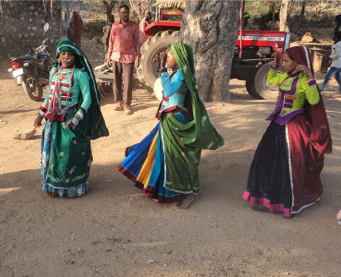
Urban India and rural India experience the same sun, but vastly unequal consequences. Heat waves in rural India arrive with a compound set of disadvantages that city dwellers simply do not face.
Consider these ground realities:
- Women in villages walk 2–5 km every morning to collect water, and in peak summer, that distance sometimes doubles. As one woman from Murbichapada shared with Project Chirag, water had to be fetched at 2 AM because the source ran dry during the day.
- Farmers depend entirely on open fields, where working through 42°C heat is not optional. Their income depends on it. Studies estimate India lost nearly 247 billion labour hours to heat in 2024, with agriculture bearing the heaviest share.
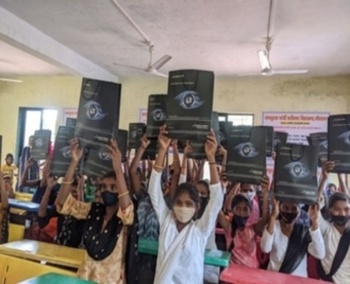
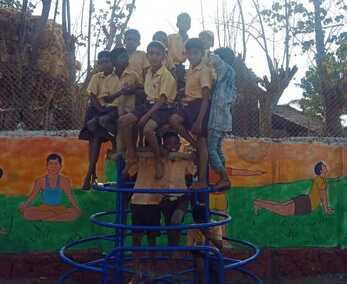
- Children at anganwadis and village schools often sit in tin-roof classrooms with no fans. Mid-afternoon temperatures inside such rooms can hit dangerous levels.
- Elderly residents and pregnant women face an acute risk of heatstroke, kidney stress, and dehydration. Yet, healthcare infrastructure in many villages is still hours away.
This is what climate change effects in rural India look like on the ground. Not in charts, but in daily suffering.
The Water Crisis Within the Heat Crisis
As temperatures rise, water sources deplete faster. Ponds dry out. Borewells draw less. Rivers shrink. Rural communities and extreme heat face what climate scientists call a “compound drought-heat wave”, where both water shortage and high temperatures amplify each other’s damage.
For villages that rely on seasonal tanks or hand pumps, April and May are the most vulnerable months. Girls miss school to fetch water. Women spend up to four hours a day on water collection. Agriculture yields drop because irrigation sources run thin at the exact time crops need them most.
India has already been flagged as one of the countries that will see the sharpest gap between water demand and availability as warming continues. Without local water solutions like solar-powered pumps, community tanks, and watershed restoration, villages have no buffer against the heat.
Electricity: The Grid Fails the Moment People Need It Most
Energy access during heat waves India is a deeply unequal story. Heatwaves pushed national electricity demand up by nearly 9% in 2024. The surge is met mostly by ramping up coal power, straining an already stretched grid. And when that grid buckles under load, it is rural feeders that get cut first.
In 2022, 66% of the country experienced power outages. Villages on the tail end of distribution lines go dark precisely when a fan or a refrigerated medicine could save a life. Without electricity, water pumps don’t run. Cold storage for vaccines and medicines fails. Charging a phone, which is the only connection many villages have to emergency services, becomes impossible.
This is the heat-power trap: rising heat demands more electricity, more electricity from coal worsens emissions, and worse emissions intensify heat. Rural communities and extreme heat are caught in the middle, without the insulation that urban infrastructure provides.
What Does Climate Resilience Actually Look Like for Rural India?
Climate resilience in rural India is not about expensive infrastructure or top-down government programs alone. It is about giving villages tools that work. Even when the grid goes down, even when there is no municipal water line, even when the nearest hospital is 40 km away.
Practical, proven steps include:
Solar energy solutions for rural heat: Solar energy projects for school students, fans, and pumps that operate independently of a failing grid. When the electricity board cuts the supply at 2 PM on a 44°C day, solar keeps running.
Community water infrastructure: Solar-powered water pumps, overhead tanks, and household filters that give families access to clean water without walking kilometres under the summer sun.
Tree plantation for natural cooling: Shade trees planted near homes, schools, and common areas reduce local temperatures, protect crops, and restore groundwater levels over time.
Electrifying anganwadis and schools: Ensuring that the most vulnerable: children and mothers have cool, safe spaces during the hottest hours of the day.
Street lighting: Safe, solar-lit paths that allow women and children to move at night during the summer months when water collection often happens after dark.
These are not future ambitions. They are solutions Project Chirag has already deployed across villages in India, with outcomes that are visible and lasting. Sustainable solutions for rural heat challenges work best when they are community-owned, solar-powered, and built around what each village actually needs.
April Is the Moment to Act Before Summer Peaks
Every year, the window between April and June closes fast. By May, the damage is already happening. Children are absent from school, crops are stressed, women are exhausted, and health facilities are overwhelmed. The time to build climate resilience in rural India is before the peak, not during it.
Project Chirag works in some of India’s most heat-exposed and under-resourced villages. Since 2010, they have brought solar power, clean water, and community development to hundreds of villages, not through charity, but through a model that leaves communities equipped for the long run.
Climate change effects in rural India cannot wait for policy cycles or political will alone. It needs people who are willing to act now, one village at a time.
You Can Help a Village Survive This Summer
Whether it is ₹500 or ₹5,000, your contribution funds solar panels, water pumps, tree plantations, and school lighting in villages that have nothing else.
Donate for solar panel project.
Or join the movement as a Youth Ambassador, spread the word, or reach out for CSR partnerships.
Because surviving summer should not be a privilege.