Electricity Is a Human Right. So Why Do Millions Still Live Without It?
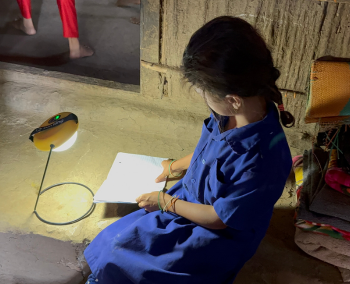
Imagine a world where your daily life stops when the sun goes down. No light for homework, no power for a small business, and no reliable way to keep medicine cold. For hundreds of millions of people worldwide, this isn’t an imaginary scenario; it’s a harsh daily reality.
The latest global data gives us mixed news. The Tracking SDG 7: The Energy Progress Report 2025 confirms significant progress: almost 92% of the world now has basic access to electricity. That sounds great, right?
Here is the heartbreaking catch: over 666 million people remain without this basic necessity. According to the report, the current pace is simply “insufficient to reach universal access by 2030.”
This massive disparity, known as energy poverty, forces us to ask a difficult question: If the world truly considers electricity a foundation of human dignity, why does this massive gap persist, particularly in the remote corners of nations like India?
The Right to Electricity in India
Access to reliable electricity is more than just a convenience; it is a fundamental human enabler.
Think of it: light at night means children can study, boosting education. Power allows a local health center to refrigerate vaccines, improving health outcomes. It lets a woman run a small sewing business after dark, fueling economic opportunity. When people talk about the Right to Electricity in India, they are referring to the right to a full life.
The opposite- life without power is devastating:
- Health Hazards: Over 2.1 billion people globally still rely on polluting fuels like kerosene and firewood for cooking and light. As the WHO Director-General, Dr. Tedros Adhanom Ghebreyesus, noted, these pollutants are “poisoning people,” contributing to millions of annual deaths from respiratory and cardiovascular diseases.
- Economic Stagnation: Without electricity, villages are trapped in a cycle of limited productivity and low income. Kerosene is not only dangerous but also expensive, acting as a constant financial drain.
This is the grim backdrop against which the work of the Chirag Rural Development Foundation, under its flagship Project Chirag, was first conceived.
Bridging India’s Energy Divide- The Challenge of the Last Mile
India has made incredible strides in its efforts toward the Power for All India campaign. The report noted that Central and Southern Asia have reduced their basic access gap from 414 million in 2010 to just 27 million in 2023, which is a massive achievement.
But that remaining gap is the hardest to close. These are the scattered, remote hamlets where the cost and time required to extend the central grid simply do not make economic sense for large power companies. This is the heart of India’s energy divide.
The latest global report calls for international financial support to be “scaled-up, tailored, and directed” to the most remote areas. This is because traditional funding mechanisms often fail to reach the people who need it most.
Rural Electrification in India- The Solar Solution
The answer to this last-mile problem isn’t bigger power plants far away; it’s smart, small-scale power right where people live.
The SDG 7 report points to Distributed Renewable Energy (DRE), such as solar mini-grids and off-grid solar systems, as the crucial technology needed to reach communities in “remote, lower-income, and fragile areas.” Solar is:
- Cost-Effective: It bypasses the massive expense of laying miles of copper wire.
- Rapidly Scalable: A solar solution can be installed in a village far faster than a conventional grid extension.
This is the model that Project Chirag has championed since 2010. Our work started by providing simple home lighting solutions, bringing light to countless households. But we realized that light is just the beginning.
To achieve true change, we must use solar power as a pivot for development. That’s why Project Chirag has moved into Integrated Village Development, focusing on a 5 Point Rural Transformation model. We don’t just provide electricity; we power livelihoods, education, health, and a sustainable future. This is the path to achieving genuine Inclusive rural development in India.
How You Can Power the Change
The statistics are clear: the world needs to prioritize and simplify financing for sustainable, decentralized solutions in developing countries. We need to focus on organizations that have proven they can reach those 666 million people.
The work of Project Chirag directly tackles the issue of Electricity access in rural India by focusing on sustainable, community-owned solar solutions. We are proving that small, decentralized power can create massive, holistic development.
Light is not a privilege; it is the power to live a full human life. By rural development donation, you are investing directly in this fundamental human right.
Light Up a Life today!