7 Building Blocks of Sustainable Rural Development in India
Article Summary
Sustainable rural development in India depends on how well livelihoods, education, healthcare, infrastructure, and local institutions reinforce each other over time. This article explores seven interconnected building blocks that, together, create lasting rural change rather than short-term improvement.
Rural development in India has never suffered from a lack of ideas. What it has struggled with is fragmentation. Over the years, villages have seen schools without teachers, livelihoods without market access, health centres without trust, and infrastructure without maintenance. Each intervention made sense on its own. Few worked for long.
Experience across rural development programs in India shows a consistent pattern: progress holds only when multiple systems move together. Income security affects whether children stay in school. Education influences health choices. Healthcare determines whether families can take economic risks. When these links are ignored, even well-funded programs lose momentum.
A holistic rural development approach does not add complexity for its own sake. It reflects how rural life actually functions.
Livelihoods That Offer Stability, Not Just Income
For most rural households, livelihood decisions are defensive. The priority is not growth, but survival through the next shock: crop failure, illness, or price fluctuation.
Agriculture continues to employ nearly half of India’s workforce, yet small landholdings and climate uncertainty mean that farming alone rarely provides a reliable income. This imbalance explains why seasonal migration remains common even in agriculturally productive regions.
Effective rural livelihood programs in India focus less on introducing new activities and more on reducing risk. Livestock support, local enterprises, skill-based work, and producer collectives all serve the same purpose: smoothing income across the year. When cash flow becomes predictable, families begin to make longer-term choices. This keeps children in school, seeking preventive healthcare, or investing in better housing.
Livelihood security, in practice, is the foundation on which all other development outcomes rest.
Education That Responds to Rural Realities
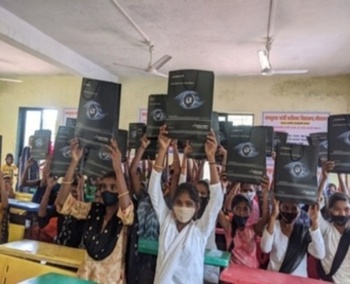
School enrollment figures in rural India have improved significantly, but learning outcomes tell a more uneven story. National surveys repeatedly show gaps in foundational literacy and numeracy, especially beyond primary grades.
One reason is that education systems often assume stability that rural life does not offer. Migration cycles, household labor demands, and language diversity disrupt continuity. When schools fail to adapt, attendance becomes irregular, and dropout rates rise quietly.
Education becomes meaningful when it connects to daily life. When parents understand its value, when children see relevance beyond exams, and when schools accommodate local constraints. Exposure to vocational skills, life skills, and community participation helps education move from obligation to opportunity.
Over time, education shapes aspiration. Villages with stronger learning ecosystems are better able to retain young people and reduce distress migration.
Healthcare Access That Prevents Setbacks
Healthcare in rural India is often accessed late. After the illness has already caused economic damage. According to NFHS data, gaps in maternal health, nutrition, and preventive care remain persistent in many rural districts.
The issue is not only infrastructure. Trust, continuity, and proximity matter just as much. Families are more likely to seek early care when services are familiar, consistent, and locally rooted.
Preventive healthcare plays a quiet but decisive role in sustainable rural development. Regular antenatal care, nutrition counselling, and early screening reduce both medical and financial shocks. Without this layer of protection, gains from livelihoods and education are easily undone by a single health emergency.
Infrastructure That Supports Daily Life
Infrastructure often enters development conversations as a checklist item. Roads, water, sanitation, and electricity. In reality, it shapes daily behavior.
Unsafe water increases illness. Poor sanitation contributes to malnutrition. Lack of roads affects school attendance, market access, and emergency care. These are not secondary effects; they directly influence outcomes across sectors.
Women, in particular, bear the cost of weak infrastructure through unpaid labor and reduced economic participation. Sustainable infrastructure planning, therefore, focuses not just on construction, but on maintenance and local ownership.
Systems that communities understand and manage last far longer than those imposed without local capacity.
Women’s Agency as a Development Driver
Rural women contribute significantly to household income and agricultural labor, yet often have limited control over resources and decisions. Development efforts that treat women only as beneficiaries miss their broader role.
Evidence from self-help groups and collectives shows consistent spillover effects. When women control savings or participate in local planning, households invest more in nutrition, education, and resilience.
Gender equity is not a parallel goal. It strengthens every other building block. Programs that ignore this reality tend to produce uneven results that fade once external support ends.
Community Ownership and Local Institutions
Many rural initiatives fail not because they are poorly designed, but because they rely on external ownership. When decisions, finances, and accountability sit outside the village, sustainability remains fragile.
Strong local institutions, self-help groups, village committees, and producer groups create continuity. They allow communities to adapt interventions as conditions change, whether due to climate, markets, or migration.
Organizations such as Project Chirag work best in a facilitative role, supporting communities to plan, manage, and eventually lead their own development pathways. This shift from partnership delivery is where long-term impact begins.
Integrated, Multi-Sector Thinking
The final building block is integration. Multi-sector rural development recognizes that livelihoods, education, and healthcare do not operate independently.
Higher income improves school retention. Education supports better health decisions. Healthcare stability enables economic risk-taking. When programs are designed in isolation, these feedback loops are lost.
Integrated planning reduces duplication, minimizes community fatigue, and aligns efforts around shared outcomes. More importantly, it reflects how rural households themselves experience development. Not as sectors, but as everyday trade-offs.
Why Integration Matters Today
Rural India is changing rapidly. Climate stress, rising aspirations, and migration pressures are reshaping village economies. The World Bank notes that distress migration often signals weak local opportunity systems rather than individual failure.
Sustainable rural development in India, therefore, is not about scaling isolated successes. It is about strengthening local systems, so progress continues even when external actors step back.
Communities that combine economic resilience, social cohesion, and institutional capacity are far better equipped to navigate change.
Conclusion
Rural development succeeds when it mirrors rural life: interconnected, adaptive, and locally grounded. Livelihoods without health remain vulnerable. Education without income stalls. Infrastructure without ownership deteriorates.
The seven building blocks outlined here are not new ideas. What is new is the growing recognition that they must function together. When communities lead, and systems align, development moves beyond projects and becomes sustainable progress.
For those looking to support rural development, the most meaningful contributions are those that strengthen local systems, encourage community leadership, and invest in long-term resilience rather than short-term outcomes.
References & Sources
- https://data.worldbank.org/indicator/SL.AGR.EMPL.ZS?locations=IN
- https://mohfw.gov.in/sites/default/files/NFHS-5_Phase-II_0.pdf
- https://www.worldbank.org/ext/en/development-topics
- https://www.worldbank.org/en/topic/jobsandgrowth
- https://www.worldbank.org/en/topic/gender
- https://aajeevika.gov.in/
- https://panchayat.gov.in/