6 Everyday Things Urban Indians Take for Granted That Rural India Still Waits For
You wake up, flick on the light, open the tap, charge your phone, and switch on the fan. And not once do you think about any of it. That’s what convenience does. It makes the extraordinary feel ordinary.
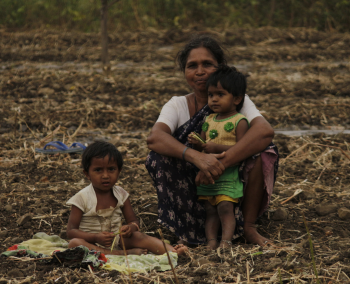
But for over 300 million Indians living in villages and remote hamlets, these “ordinary” moments are anything but. The urban vs rural India gap isn’t just a statistic in a government report. It plays out every single morning, in the dark, in the heat, in the thirst.
Here are 6 things most urban Indians never think twice about, that rural India is still waiting for.
Light After Sunset
When the sun goes down in urban India, life doesn’t stop. Offices stay open, restaurants fill up, and children study under tube lights.
In large parts of rural India, darkness is literal. Unreliable power grids, frequent outages lasting 8–12 hours, and homes that have never been electrified mean that life in rural India vs urban is almost a tale of two different eras. Kerosene lamps, which cost more per unit of light than grid electricity, are still common in many villages.
Children finish homework before sunset, or don’t finish it at all.
Clean Drinking Water on Tap
Urban residents turn a tap and expect clean water. If it tastes off, they buy a Bisleri.
The basic needs in rural India tell a very different story. Women and girls in many villages walk 2–5 kilometres every day to fetch water. In summer, that walk gets longer as local sources dry up. In Maharashtra’s Murbichapada village, a woman shared how she had to go to the water source at 2–3 AM just to fill a single vessel, because during the day the competition at the source was too much to bear.
Waterborne diseases, contaminated borewells, and seasonal scarcity are not abstract problems in rural India. They are daily life.
A Fan in Summer
May in Mumbai or Delhi is brutal. But you survive it with a ceiling fan, an AC, or a cooler. You complain about the heat from inside a building.
In villages without reliable electricity, summers are genuinely dangerous. Heat exhaustion and dehydration affect the elderly and young children the most. A fan, which is one of the most basic comforts, sits idle because the power supply doesn’t show up when it’s needed most. This is one of the starkest markers of the urban rural divide in India: the same 45-degree afternoon hits everyone, but only some can do anything about it.
A Charged Phone, and What Comes With It
Your phone being dead is an inconvenience. You find a cable, plug it in, sorted.
For millions living in rural living conditions in India, a dead phone can mean no way to call for a doctor, no way to access government schemes, and no way for a farmer to check market prices before selling his crop. Solar-powered phone charging, a facility that sounds almost trivial to an urban ear, is actually a lifeline that connects villages to everything. Banking, health, information, and family.
Connectivity isn’t just about Instagram. For rural India, it’s access itself.
Education That Doesn't Stop When the Sun Does
Urban parents complain about screen time. Rural parents worry about whether there’s enough light for their children to read by.
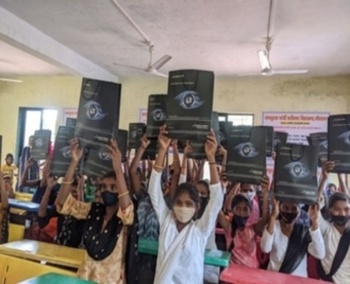
Rural infrastructure in India, particularly schools, suffers from the same energy problem that everything else does. An Anganwadi (government childcare centre) without electricity means no refrigeration for vaccines, no functioning fans in summer, and no light for learning after a certain hour. Teachers, too, are affected. Solar lighting in schools has been shown to directly improve attendance and learning outcomes.
The gap in educational outcomes between urban and rural India is not only about teachers or books. It is, fundamentally, also about light.
Healthcare That's Actually Accessible
Urban India complains about hospital wait times. In rural India, the hospital is sometimes 30–40 kilometres away, reachable only by roads that are impassable in the monsoon. But beyond distance, the issue is infrastructure.
Primary health centres in villages without power cannot safely store medicines, run basic equipment, or serve patients after dark. A delivery at night in a rural clinic without electricity is genuinely dangerous. Solar power for health centres is the difference between care and no care.
The Gap Has a Name. And It Can Be Closed.
This is the urban rural divide in India in its most human form. Not GDP charts or policy papers, but light, water, a working fan, a charged phone, a lit classroom, a functional clinic.
Project Chirag works to close this gap, one village at a time, through solar power and community-driven rural development. Because every Indian, no matter their postcode, deserves the basics that the rest of us never think about.
If this moved you even slightly, the simplest thing you can do is act on it.
👉Donate to solar power NGO | Join the Movement
Project Chirag is a non-profit enabling solar power to build a self-sufficient and sustainable rural India.