5 Things India's Rural Gen Z Actually Wants From Development
India’s development conversation is long overdue for a shift in perspective. We talk about rural youth endlessly in policy papers, CSR reports, NGO impact decks, but we rarely pause to ask what they actually want. Not what we think they need, but what they are asking for themselves.
Rural Gen Z is not a passive beneficiary group. Two-thirds of India’s 378 million young people live in rural areas, and most are disconnected from the country’s economic growth. That disconnection is a structural problem, and the young people living inside it know exactly where the gaps are.
Here is what they are telling us, backed by data.
Real Digital Access, Not Just a Signal Bar
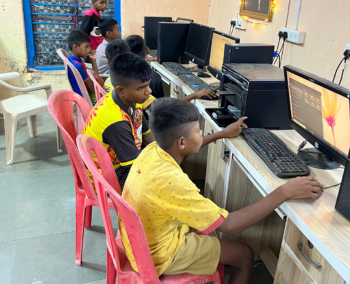
Access to a smartphone is no longer the finish line. Rural Gen Z wants the skills to use it meaningfully.
According to ASER 2024, 90% of rural youth aged 14–16 have a smartphone at home, and 82% know how to use one. Yet personal device ownership among those who can use smartphones stood at just 31%. The device exists, but it is shared between siblings, parents, and the whole household.
More telling is the skills gap. Only 43.6% of rural youth aged 15–24 can send emails, and just 31% can carry out basic online banking transactions. Being online and being digitally capable are two very different things, and rural Gen Z is aware of the difference. They are not asking for data plans. They are asking for the confidence and competence to use the internet as a tool for learning, for income, for opportunity.
Digital access for rural youth in India is about training.
Education That Goes Beyond the Classroom
When young people in rural India talk about child education, they want education that connects to a future they can actually see. This is far above just asking about better schools.
School dropout in rural India continues to track higher than urban rates, driven by a mix of economic pressure, distance, and critically, a perceived absence of relevance. What does finishing Class 12 lead to, if there are no local jobs and no money to move to a city?
According to the India Employment Report 2024, one in every three young Indians falls under the NEET category as of 2022, not in employment, education, or training. In rural communities, that number is disproportionately high. Girls are particularly affected, often pushed out of the education pipeline by early marriage and domestic responsibility.
Rural youth are not anti-education. They are asking for education that comes with a roadmap. Vocational training, digital literacy, and pathways to local livelihoods must be woven into what child education in India actually means for the half of the country that lives outside its cities.
Livelihood Options That Do Not Require Leaving Home
There is a persistent assumption in development circles that rural youth want to migrate that ambition automatically means moving to a city. The data is more complicated.
A survey of 5,169 rural Opportunity Youth across 21 Indian states found that agriculture remains a significant labour pathway in rural areas, yet young people want diversified options alongside it. They want to work in their own districts. They want rural employment opportunities in India that do not force a choice between aspiration and community.
This is where livelihood NGOs for rural India have a genuine role. Skilling programmes, self-help group support, and access to rural enterprise ecosystems- these are not charity. They are the infrastructure that allows a 22-year-old in rural Maharashtra or Jharkhand to build something without abandoning everything familiar.
Youth development in rural communities cannot keep pointing toward the city as the only exit.
To Be Heard in the Decisions That Affect Them
This is the least tangible ask, and perhaps the most important one.
India’s youth population stands at approximately 420 million in 2024, about 29% of the total population, with nearly 268 million, or 64%, living in rural India. That is a staggering number of young people whose voices are routinely absent from the rooms where decisions about their futures are made.
Rural Gen Z is not politically naive. They follow the news, they form opinions, and they use social media to engage with issues that affect them. What they lack is structural access to platforms where their input can shape local governance, NGO programme design, or government schemes. The future of rural India’s youth depends on whether institutions, government, civil society, and NGOs for rural development are willing to build feedback mechanisms that go beyond surveys.
Empathy-led development starts with listening. Not to what consultants imagine rural youth want, but to what rural youth are directly saying.
Dignity- In Infrastructure, Not Just In Words
The fifth question is the one that cuts across all the others: dignity. Rural Gen Z wants to survive.
That means reliable electricity so students can study after dark. It means clean drinking water that does not require a two-hour walk. It means sanitation that gives adolescent girls a reason to stay in school. It means roads, healthcare access, and community spaces that signal investment in their futures.
These are the baseline conditions for any of the other four things on this list to be possible. An NGO for rural development that addresses only one node, say, skilling, without addressing the surrounding conditions, is treating symptoms rather than systems.
Project Chirag’s approach to solar-powered electrification, water access, and anganwadi support is built around this understanding. Light is not the end goal. It is what makes everything else possible: studying, earning, connecting, and staying.
The Takeaway for Development Organisations
Rural Gen Z are waiting to be backed.
What they are asking for is digital skills, relevant education, local livelihoods, a voice, and dignified infrastructure, which is entirely achievable. It requires development organisations to move away from top-down programme design and toward genuine community partnership.
The future of rural India’s youth is more than a problem to be solved from the outside. It is a potential to be unlocked from within.
If you believe rural youth deserve more than charity, they deserve investment. Support Project Chirag‘s work in rural communities across India.
Donate For Rural Development India | Join the Youth Ambassador Program
References
Global Opportunity Youth Network & Global Development Incubator. (2024). State of rural youth employment in India 2024. https://goyn.org/resource/state-of-rural-youth-employment-2024/
Internet and Mobile Association of India & KANTAR. (2025, January). The Internet in India Report 2024. As reported by MediaNama. https://www.medianama.com/2025/01/223-rural-adoption-ai-india-internet-2024-kantar-iamai-report/
Kumar, R., & Bhutada, P. (2025). Youth’s digital readiness in rural India. Ideas for India. https://www.ideasforindia.in/topics/human-development/youth-s-digital-readiness-in-rural-india
OpenGov Asia. (2024, October 22). Rural youth driving India’s digital transformation. https://archive.opengovasia.com/2024/10/22/rural-youth-driving-indias-digital-transformation/
People Research on India’s Consumer Economy (PRICE). (2024). India’s young harbour big plans. ICE360. https://www.price360.in/articles-details.php?url=indias-young-harbour-big-plans
Institute for Human Development & International Labour Organization. (2024). India employment report 2024: Youth employment, education and skills. https://www.ilo.org/sites/default/files/2024-08/India%20Employment%20-%20web_8%20April.pdf