What Self-Help Groups Can Achieve When Basic Infrastructure Is in Place
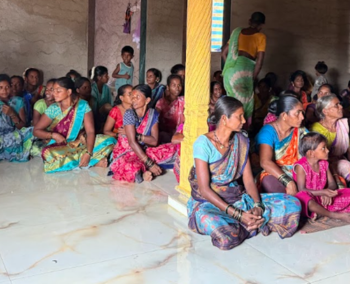
Walk into almost any village in rural India today, and you’ll likely find a group of women sitting together, notebooks open, discussing savings and small loans. This is the quiet backbone of rural development – the Self Help Groups in India movement. As of January 2024, close to 9.98 crore women had been mobilized into 90.39 lakh SHGs under the Deendayal Antyodaya Yojana-National Rural Livelihoods Mission, DAY-NRLM (Ministry of Rural Development, 2024).
But numbers alone don’t tell the full story. What actually determines whether an SHG thrives or stalls often has little to do with the women’s willpower and everything to do with what surrounds them – electricity, water, roads, schools. Women Self-Help Groups can organise, save, and plan brilliantly, but without basic infrastructure, much of that planning has nowhere to go.
The Missing Link: Infrastructure Before Enterprise
An SHG meeting that runs past sunset without electricity ends early. A woman who spends three hours each day fetching water has little time left for a women livelihood initiatives rural India . A farmer relying only on rainfall cannot plan a second crop cycle, no matter how strong her group’s savings pool is.
This is where Rural Infrastructure Development changes the equation. A 2019-20 impact evaluation of DAY-NRLM by the International Initiative for Impact Evaluation (3ie), conducted with World Bank support across nine states, found that an additional 2.5 years of exposure to the Mission led to a 19% increase in household income over the base amount, along with higher female labour force participation in treatment areas (Ministry of Rural Development, 2024). Infrastructure support is often the difference between an SHG that stays a savings circle and one that becomes an engine of local enterprise.
What Changes When Power and Water Reach a Village
At Project Chirag, this link between infrastructure and empowerment plays out directly in the field. Under the Integrated Village Development Program, villages that received solar electrification and clean water access saw measurable shifts – not just in convenience, but in what women could actually do with their time and resources.
In Khuded, Palghar, a solar-powered lift irrigation system brought water to 28 acres of farmland that had previously depended entirely on erratic rainfall. One farmer described losing 1,000 brinjal and 500 chili plants to water scarcity before the intervention. A loss that pushed him out of vegetable farming altogether. With assured irrigation in place, cultivation resumed year-round.
In Chandragav, Palghar, solar home lighting extended into a different kind of impact: a student who once studied by oil lamp during the monsoon could finally combine schoolwork with her ambition of becoming a fashion designer, using the additional hours of reliable light for sewing practice.
Across Project Chirag’s 2024-25 program year, this pattern repeated at scale: 33 villages, 1,216 homes electrified, 7,622 beneficiaries reached, and 29,660 litres of clean drinking water made available per day (Project Chirag, 2025). None of this required inventing new institutions. It required making existing ones, including SHGs, functional.
SHG Empowerment Needs a Physical Foundation
SHG empowerment is frequently discussed in terms of training, credit access, and market linkages. All of that matters. But training a woman to run a micro-enterprise means little if her workspace has no light after 6 pm, or if she spends her productive hours on water collection instead of production.
This is why infrastructure-first models matter for Women-Led Community Development. When a village gets solar streetlights, women report feeling safer moving outdoors after dark – a precondition for evening SHG meetings, night classes, or home-based enterprise work. When schools and anganwadis get electrified, women’s time is freed from childcare logistics that would otherwise limit their group’s activities.
Project Chirag’s own data reflects this: 21 schools and 7 ICDS centers were electrified in 2024-25 alone, part of a lifetime total of 162 schools and 77 ICDS centers across 852 villages (Project Chirag, 2025). Each of these is not just a facility upgrade. It’s time and safety returned to women who would otherwise be managing around the gap.
From Survival to Opportunity: Rural Livelihood Gains
Once basic infrastructure is dependable, SHGs stop operating in survival mode and start pursuing Rural Livelihood Opportunities with more consistency. Farmers gain the confidence to diversify crops. Families reduce distress migration, since income no longer depends solely on unpredictable weather. Community governance structures, often shaped through SHG participation, become steadier because members aren’t constantly firefighting basic needs.
This is also where Financial Inclusion for Women gains real traction. An SHG’s savings and credit cycle works best when its members have stable enough livelihoods to contribute regularly. Reliable irrigation, safer water, and functioning schools all reduce the shocks that disrupt these cycles.
Why Village Development Programs Need to Think Beyond Single Interventions
The lesson from this pattern is straightforward: Village Development Programs that isolate SHG training from infrastructure investment are working with one hand tied. Electrification, water access, and irrigation are the conditions that make those goals achievable at scale.
Project Chirag’s lifetime impact – 2,79,620 beneficiaries, 873 kilowatts of solar systems installed, and 751 acres brought under solar lift irrigation (Project Chirag, 2025), reflects a model built on this understanding: build the foundation, and community-led groups do the rest.
Be Part of the Change
Rural India’s transformation isn’t happening despite the women who lead it. It’s happening because of what’s placed in their hands to work with. Project Chirag continues to bring solar power, clean water, and functioning schools to villages where these basics still don’t exist.
Support Project Chirag’s work at projectchirag.org and help build the infrastructure that lets rural women’s groups do what they already know how to do.
FAQs
- What is the main objective of Self Help Groups in India?
SHGs aim to bring rural women together to pool savings, access credit, and undertake joint economic activities, primarily under the DAY-NRLM framework (Ministry of Rural Development, 2024). - How does infrastructure development support women’s empowerment?
Reliable electricity, water, and irrigation free up women’s time and improve safety, allowing them to participate more consistently in SHG activities, education, and livelihood work. - How many women are part of Self Help Groups in India currently?
As of January 2024, approximately 9.98 crore women were mobilized into 90.39 lakh SHGs under DAY-NRLM (Ministry of Rural Development, 2024). - What role does solar energy play in rural development?
Solar electrification powers homes, schools, and irrigation systems in areas without reliable grid access, directly supporting education, farming, and safety in rural communities. - How can I support rural development programs like Project Chirag?
Individuals and organisations can support rural development, partner, or volunteer through Project Chirag’s website to fund solar electrification, water access, and irrigation projects in underserved villages.
References (APA)
Ministry of Rural Development. (2024, December). Self-help groups under NRLM [Press release]. Press Information Bureau, Government of India. https://www.pib.gov.in/PressReleasePage.aspx?PRID=2146872
Ministry of Rural Development. (2024, February). Rural development schemes through Self-Help Groups [Press release]. Press Information Bureau, Government of India. https://www.pib.gov.in/PressReleasePage.aspx?PRID=2003572
Project Chirag. (2025). Annual Report 2024–25. Chirag Rural Development Foundation.